

English


Paperback
₹3644
₹4801
24.1% OFF
(All inclusive*)
Delivery Options
Please enter pincode to check delivery time.
*COD & Shipping Charges may apply on certain items.
Review final details at checkout.
Looking to place a bulk order? SUBMIT DETAILS
Delivery Options
Please enter pincode to check delivery time.
*COD & Shipping Charges may apply on certain items.
Review final details at checkout.
About The Book
Description
Author
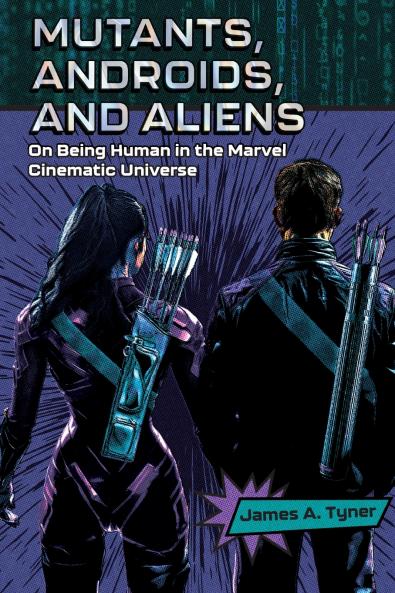
In both literature and film mutants androids and aliens have long functioned as humanity's Other--nonhuman bodies serving as surrogates to explore humanity's prejudice bigotry and hatred. Scholars working in fields of feminism ethnic studies queer studies and disability studies among others have deconstructed representations of the Othered body and the ways these fictional depictions provide insight into the contested terrains of identity subjectivity and personhood. In science fiction more broadly and the superhero genre in particular the fictional Other--often a superhero or a villain--is juxtaposed against the normal human and such Others have long been the subject of academic investigation. <p/> Author James A. Tyner shifts this scholarly focus to consider the ordinary humans who ally with or oppose Othered superheroes. Law enforcement officers military officials politicians and the countless nameless civilians are all examples of humans who try to make sense of a rapidly changing <i>more-than-human </i>and <i>other-than-human </i>universe. The resulting volume <i>Mutants Androids and Aliens: On Being Human in the Marvel Cinematic Universe</i> provides a critical posthumanist reading of being human in the Marvel Cinematic Universe (MCU). <p/> Centering the MCU's secondary human characters including Matthew Ellis Ellen Nadeer Rosalind Price as well as Jimmy Woo Sadie Deever Holden Radcliffe and others Tyner considers how these characters attempt to monitor incarcerate or exterminate those beings considered unnatural and thus threatening. Placing into conversation posthumanism environmental ethics and myriad philosophical and biological ontologies of life and death Tyner maintains that the superhero genre reflects the current complexities of meaningful life--and of what happens in society when the human is no longer the unquestioned normative standard.

Piracy-free

Assured Quality

Secure Transactions

Fast Delivery

Sustainably Printed
Details
ISBN 13
9781496857392
Publication Date
-02-05-2025
Pages
-212
Weight
-294 grams
Dimensions
-152x229x12.31 mm
