


English


₹5247
(All inclusive*)
Paperback
Delivery Options
Please enter pincode to check delivery time.
*COD & Shipping Charges may apply on certain items.
Review final details at checkout.
Looking to place a bulk order? SUBMIT DETAILS
Delivery Options
Please enter pincode to check delivery time.
*COD & Shipping Charges may apply on certain items.
Review final details at checkout.
About The Book
Description
Author
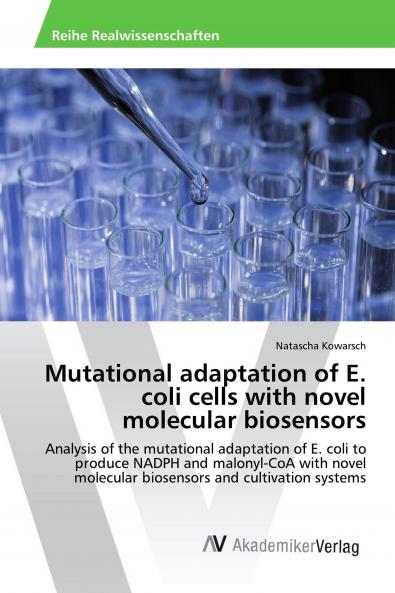
Fatty acids play an important role in production of biodiesel as well as cosmetics and health products. One of the limiting factors in the fatty acid biosynthesis is NADPH which is required for the reduction steps in the FAB cycle. An option to overcome this problem is the engineering of NADPH overproducing E. coli strains. Siedler et al. developed a biosensor based on the transcriptional regulator SoxR for NADPH-consuming enzymes. The activation of SoxR by high NADPH levels leads to the transcription of the SoxRS regulon. This regulon can contain many different genes and therefore can be designed to select for NADPH overproducing strains. In order to achieve this the long-term mutational adaption of the engineered E. coli cells was tested in an ALE experiment. Through Next Generation sequencing of the genomes a mutation in the ygcW gene was found which could lead to a higher NADPH production.

Piracy-free

Assured Quality

Secure Transactions

Fast Delivery

Sustainably Printed
Details
ISBN 13
9783330521032
Publication Date
-18-07-2017
Pages
-100
Weight
-141 grams
Dimensions
-150x220x5.74 mm
