


English


Paperback
₹3928
₹4139
5.1% OFF
(All inclusive*)
Delivery Options
Please enter pincode to check delivery time.
*COD & Shipping Charges may apply on certain items.
Review final details at checkout.
Looking to place a bulk order? SUBMIT DETAILS

Piracy-free

Assured Quality

Secure Transactions
About The Book
Description
Author
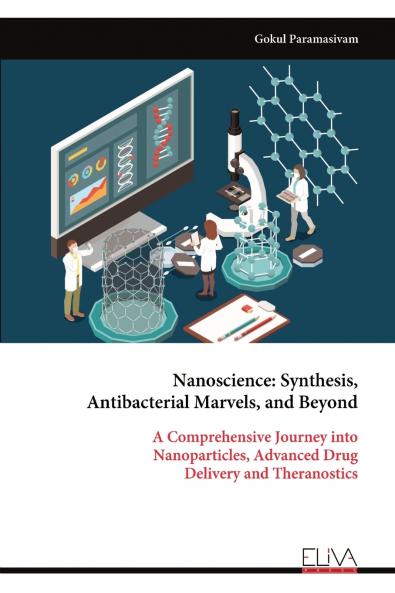
Nanomaterials are endowed with unique features and essential properties suitable for employing in the field of nanomedicine. The nanomaterials can be classified as 0D 1D 2D and 3D based on their dimensions. The nanomaterials can be malleable and ductile and they can be drawn into wires and sheets. Examples of nanomaterials are quantum dots (0D) nanorods nanowires (1D) nanosheets (2D) and nanocubes (3D). These nanomaterials can be synthesized using top-down and bottom-up approaches. Drug discovery involves the systematic process of identifying and developing potential therapeutic compounds with lead compound identification being a crucial step in pinpointing promising candidates for further development. Silver nanoparticles are important for their antimicrobial properties offering potential applications in medical devices and healthcare products due to their ability to inhibit the growth of bacteria and other pathogens. Additionally their unique physicochemical characteristics make them valuable in catalysis sensors and various emerging technologies. This book comprises of the review of nanomaterials synthesis advanced drug delivery theranostics and potential research about antibacterial enhancement with surface functionalization (Ag/Chitosan) Green synthesis (Ag/ H. auriculata plant extract) silver nanoprisms Alloy (Ag/Zn) and silver nanorods. The nanomaterials with different dimensions have unique physicochemical properties that can be utilized for therapy and diagnosis. The multifunctional ability of the nanomaterials can have a distinct advantage that is used in the field of theranostics. Different dimensions of the nanomaterials would have more scope in the field of nanomedicine.
Piracy-free
Assured Quality
Secure Transactions
Delivery Options
Please enter pincode to check delivery time.
*COD & Shipping Charges may apply on certain items.
Review final details at checkout.
Details
ISBN 13
9789999314985
Publication Date
-14-01-2024
Pages
-104
Weight
-153 grams
Dimensions
-152x229x5.47 mm
