

English


Paperback
₹4604
(All inclusive*)
Delivery Options
Please enter pincode to check delivery time.
*COD & Shipping Charges may apply on certain items.
Review final details at checkout.
Looking to place a bulk order? SUBMIT DETAILS
Delivery Options
Please enter pincode to check delivery time.
*COD & Shipping Charges may apply on certain items.
Review final details at checkout.
About The Book
Description
Author(s)
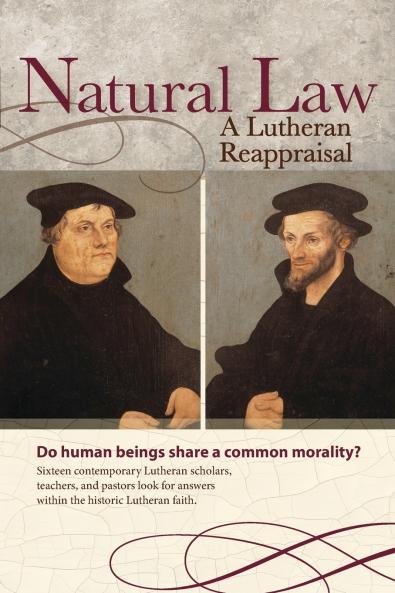
<p><em style=background-color: rgba(0 0 0 0)>Natural Law: A Lutheran Reappraisal&nbsp;</em>presents engaging essays from contemporary Lutheran scholars teachers and pastors each offering a fresh reappraisal of natural law within the context of historic Lutheran teaching and practice. Thought-provoking questions following each essay will help readers apply key Bible texts associated with natural law to their daily lives.</p><p>&nbsp;</p><p><strong style=background-color: rgba(0 0 0 0)>Why the Natural Law Is Necessary</strong></p><p>No contemporary thinker is interested in a wooden representation of the natural law that is tied necessarily to the particular metaphysical foundations in the Thomistic-Aristotelian synthesis. The history of natural law shows a wide variety of interpretations and applications. But they all have some elements in common. They all oppose cultural relativism the notion that laws are mere moral conventions that vary among societies with no transcendent ontological claim to being universally valid and binding. To the contrary; those who hold to the natural law believe that for a law to be just it must conform to the structure of reality itself and not depend on the oscillating opinions and preferences of human beings. The law must be the same for all human beings and at all times so that if murder is morally wrong in America it is equally so in Asia and Africa. If torture is to be condemned as evil in Jerusalem it must be equally so in London and Tehran. The United Nations' Declaration of Human Rights formulates rules with respect to freedom and equality that are binding on all nations and peoples not because of any majority vote but because of an inherent correspondence between reason and nature. That is what is meant by saying that the Law is written on the hearts (Romans 2:25) of all human beings.</p><p>-&nbsp;Carl Braaten -</p>

Piracy-free

Assured Quality

Secure Transactions
Details
ISBN 13
9780758627339
Publication Date
-01-12-2010
Pages
-324
Weight
-441 grams
Dimensions
-152x229x18.42 mm
