


English



Paperback
₹4015
₹4625
13.19% OFF
(All inclusive*)
Delivery Options
Please enter pincode to check delivery time.
*COD & Shipping Charges may apply on certain items.
Review final details at checkout.
Looking to place a bulk order? SUBMIT DETAILS
Delivery Options
Please enter pincode to check delivery time.
*COD & Shipping Charges may apply on certain items.
Review final details at checkout.
About The Book
Description
Author
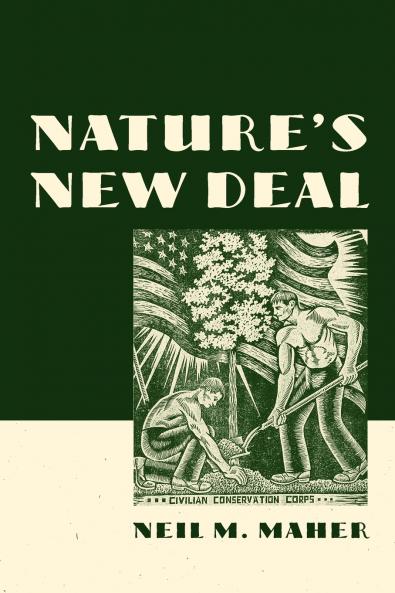
The Great Depression coincided with a wave of natural disasters including the Dust Bowl and devastating floods of the Ohio and Mississippi rivers. Recovering from these calamities--and preventing their reoccurrence--was a major goal of the New Deal. In Nature''s New Deal Neil M. Maher examines the history of one of Franklin D. Roosevelt''s boldest and most successful experiments the Civilian Conservation Corps describing it as a turning point both in national politics and in the emergence of modern environmentalism. Indeed Roosevelt addressed both the economic and environmental crises by putting Americans to work at conserving natural resources through the Soil Conservation Service the Tennessee Valley Authority and the Civilian Conservation Corps (or CCC). The CCC created public landscapes--natural terrain altered by federal work projects--that helped environmentalism blossom after World War II Maher notes. Millions of Americans devoted themselves to a new vision of conservation one that went beyond the old model of simply maximizing the efficient use of natural resources to include the promotion of human health through outdoor recreation wilderness preservation and ecological balance. And yet as Maher explores the rise and development of the CCC he also shows how the critique of its campgrounds picnic areas hiking trails and motor roads frames the debate over environmentalism to this day. From the colorful life at CCC camps to political discussions in the White House and the philosophical debates dating back to John Muir and Frederick Law Olmsted Nature''s New Deal captures a key moment in the emergence of modern environmentalism.

Piracy-free

Assured Quality

Secure Transactions

Fast Delivery

Sustainably Printed
Details
ISBN 13
9780195392418
Publication Date
-01-08-2009
Pages
-330
Weight
-470 grams
Dimensions
-156x234x18.75 mm
