



₹5200
₹7835
33.63% OFF
(All inclusive*)
Paperback
Delivery Options
Please enter pincode to check delivery time.
*COD & Shipping Charges may apply on certain items.
Review final details at checkout.
Looking to place a bulk order? SUBMIT DETAILS
Delivery Options
Please enter pincode to check delivery time.
*COD & Shipping Charges may apply on certain items.
Review final details at checkout.
About The Book
Description
Author
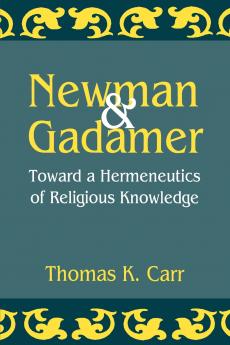
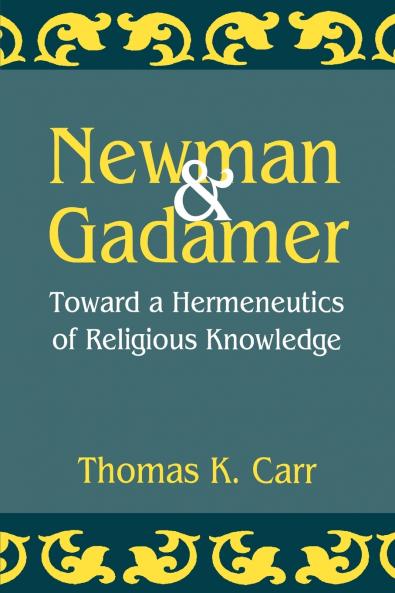
Thomas K. Carr examines the religious epistemology of John Henry Newman alongside the philosophical hermeneutics of Hans-Georg Gadamer. The two writers are found to cover a surprising amount of common ground: They make similar claims and they fall into similar errors. A critical examination of four of Newman''s leading ideas -- first principles antecedent probability doctrinal development and the illative sense -- are compared with such Gadamerian themes as self-understanding Bildung projection tradition and the fusion of horizons. Carr concludes with a constructive proposal that applies a Newman-Gadamer synthesis to questions about knowledge of God.

Piracy-free

Assured Quality

Secure Transactions

Fast Delivery

Sustainably Printed
Details
ISBN 13
9780788503047
Publication Date
-01-01-1996
Pages
-216
Weight
-299 grams
Dimensions
-152x229x12.53 mm
