



English




Hardback
₹11104
₹13623
18.49% OFF
(All inclusive*)
Delivery Options
Please enter pincode to check delivery time.
*COD & Shipping Charges may apply on certain items.
Review final details at checkout.
Looking to place a bulk order? SUBMIT DETAILS

Piracy-free

Assured Quality

Secure Transactions
About The Book
Description
Author
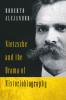
<p>In this extraordinary contribution to Nietzsche studies Robert Alejandro offers an original interpretation of Friedrich Nietzsche's philosophy viewed as a complete whole. Alejandro painstakingly traces the different ways in which Nietzsche reconfigured and shifted his analyses of morality and of the human condition until he was content with the final result: nothing was dispensable; everything was necessary. This is a philosophy of reconciliation--hardly nihilism--and it is a perspective that is not adequately addressed elsewhere in the literature on Nietzsche. </p><p>Alejandro traces the evolution of Nietzsche's thought by identifying the different layers of his philosophy expressed in a complex array of stories and historical narratives. Alejandro analyzes the different stories of Nietzsche places those stories within a tradition of genealogical theorizing and interprets both the stories and the genealogy in terms of one of Nietzsche's unique features his use of historiobiography. According to Alejandro historiobiography blends the idea of an attunement with all history and one's awareness of this attunement. As a mode of philosophizing historiobiography allows Nietzsche to view all human history as if it runs through his own life and thoughts. Alejandro argues that Nietzsche deployed three strategies to find relief from his sense of the meaninglessness of life: his magnified concept of what he himself represented in human history his doctrine of the eternal recurrence and his philosophy of reconciliation.</p>
Piracy-free
Assured Quality
Secure Transactions
Delivery Options
Please enter pincode to check delivery time.
*COD & Shipping Charges may apply on certain items.
Review final details at checkout.
Details
ISBN 13
9780268204426
Publication Date
-15-01-2022
Pages
-394
Weight
-620 grams
Dimensions
-152x229x22.23 mm
