

English


Paperback
₹4240
(All inclusive*)
Delivery Options
Please enter pincode to check delivery time.
*COD & Shipping Charges may apply on certain items.
Review final details at checkout.
Looking to place a bulk order? SUBMIT DETAILS

Piracy-free

Assured Quality

Secure Transactions
About The Book
Description
Author
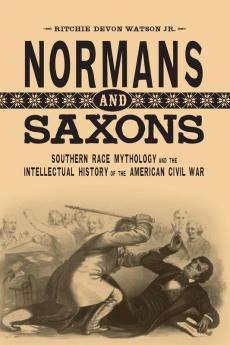
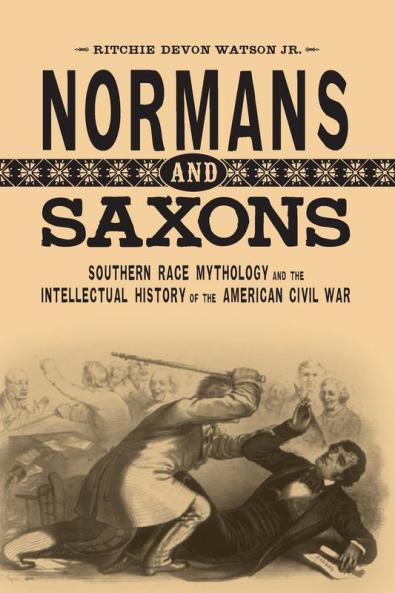
<p>When Representative Preston Brooks of South Carolina savagely caned Senator Charles Sumner Massachusetts on the floor of the U.S. Senate on May 21 1856 southerners viewed the attack as a triumphant affirmation of southern chivalry northerners as a confirmation of southern barbarity. Public opinion was similarly divided nearly three-and-a-half years later after abolitionist John Brown's raid on the Federal arsenal at Harper's Ferry Virginia with northerners crowning John Brown as a martyr to the cause of freedom as southerners excoriated him as a consciousness fanatic. These events opened American minds to the possibility that North and South might be incompatible societies but some of Dixie's defenders were willing to go one step further--to propose that northerners and southerners represented not just a divided people but two scientifically distinct races. In <i>Normans and Saxons </i> Ritchie Watson Jr. explores the complex racial mythology created by the upper classes of the antebellum South in the wake of these divisive events to justify secession and eventually the Civil War. <p/>This mythology cast southerners as descendants of the Normans of eleventh-century England and thus also of the Cavaliers of the seventeenth century some of whom had come to the New World and populated the southern colonies. These Normans were opposed in mythic terms by Saxons--Englishmen of German descent--some of whose descendants made up the Puritans who settled New England and later fanned out to populate the rest of the North. The myth drew on nineteenth-century science and other sources to portray these as two separate warring races the aristocratic and dashing Normans versus the common and venal Saxons. According to Watson southern polemical writers employed this racial mythology as a justification of slavery countering the northern argument that the South's peculiar institution had combined with its Norman racial composition to produce an arrogant and brutal land of oligarchs with a second-rate culture. Watson finds evidence for this argument in both prose and poetry from the literary influence of Sir Walter Scott De Bow's Review and other antebellum southern magazines to fiction by George Tucker John Pendleton Kennedy and William Alexander Caruthers and northern and southern poetry during the Civil War especially in the works of Walt Whitman. Watson also traces the continuing impact of the Norman versus Saxon myth in Lost Cause thought and how the myth has affected ideas about southern sectionalism of today. <p/><i>Normans and Saxons</i> provides a thorough analysis of the ways in which myth ultimately helped to convince Americans that regional differences over the issue of slavery were manifestations of deeper and more profound differences in racial temperament--differences that made civil war inevitable.</p>
Piracy-free
Assured Quality
Secure Transactions
Delivery Options
Please enter pincode to check delivery time.
*COD & Shipping Charges may apply on certain items.
Review final details at checkout.
Details
ISBN 13
9780807178881
Publication Date
-01-04-2023
Pages
-298
Weight
-407 grams
Dimensions
-152x229x17.01 mm
