


English


Paperback
₹5334
(All inclusive*)
Delivery Options
Please enter pincode to check delivery time.
*COD & Shipping Charges may apply on certain items.
Review final details at checkout.
Looking to place a bulk order? SUBMIT DETAILS
Delivery Options
Please enter pincode to check delivery time.
*COD & Shipping Charges may apply on certain items.
Review final details at checkout.
About The Book
Description
Author
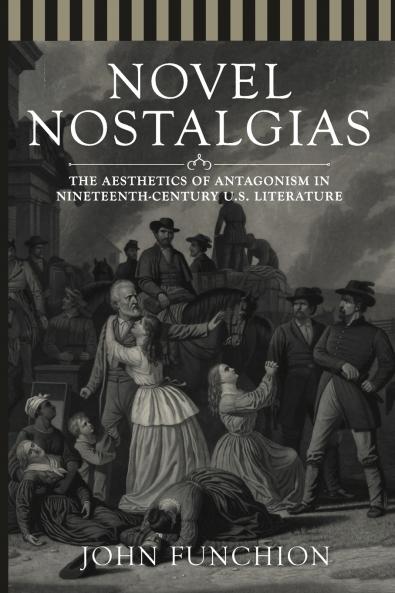
<div><i>Novel Nostalgias:</i> <i>The Aesthetics of Antagonism in Nineteenth-Century U.S. Literature</i> establishes how the longing to recover a lost home or past drove some of the central conflicts of the nineteenth-century United States. Providing one of the few U.S. literary histories that examines cultural material from both before and after the Civil War John Funchion argues that a diverse array of novels from William Wells Brown's <i>Clotel</i> to L. Frank Baum's <i>The Wonderful Wizard of Oz</i> imagined new politically-and antagonistically-charged communities through forms of nostalgic longing.<br> &nbsp;<br> In contrast with studies that characterized the nineteenth-century U.S. novel as a consensus-generating form complicit with disciplinary culture Funchion shows how novels shaped a series of culture wars by advancing antagonistic nostalgias. Southern slave owners and their slaves or industrial magnates and their union opponents alike enlisted the power of nostalgia to validate their rival visions of the nation as lost moments awaiting recovery. Antagonistic nostalgias legitimated the political claims of movements as diverse as abolitionism sectionalism populism socialism anarchism and cosmopolitanism. <i>Novel Nostalgias</i> provides a deep cultural historical understanding of the nineteenth-century United States but ultimately it also allows for a better understanding of how twenty-first-century movements function.</div>

Piracy-free

Assured Quality

Secure Transactions
Details
ISBN 13
9780814252178
Publication Date
-31-12-2015
Pages
-266
Weight
-365 grams
Dimensions
-152x229x15.27 mm
