

English


Paperback
₹3613
₹4726
23.55% OFF
(All inclusive*)
Delivery Options
Please enter pincode to check delivery time.
*COD & Shipping Charges may apply on certain items.
Review final details at checkout.
Looking to place a bulk order? SUBMIT DETAILS

Piracy-free

Assured Quality

Secure Transactions
About The Book
Description
Author
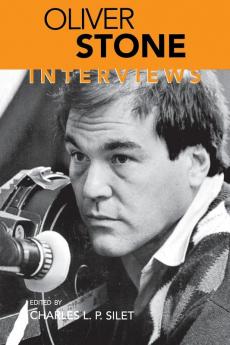
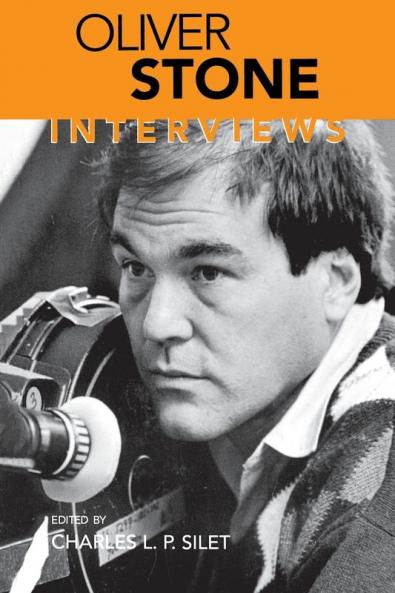
Throughout his career Oliver Stone (b. 1946) has broken traditions and challenged audiences with a series of daring angry violent and often confrontational films. Politically charged movies such as <i>Nixon</i> (1995) <i>JFK</i> (1991) and <i>Wall Street</i> (1987) and his Vietnam trilogy of <i>Platoon</i> (1986) <i>Born on the 4th of July</i> (1989) and <i>Heaven and Earth</i> (1993) provoke and enrage critics and audiences from all ideological walks. In a short time Stone has established himself as one of the most admired and most reviled directors in American cinema. <p/> Ranging from 1981 to 1997 the fifteen conversations featured in <i>Oliver Stone: Interviews</i> reveal a man frustrated by what he sees as the hypocrisies of American politics of conservatism and of the Hollywood film industry. But the conflicts and tensions these issues generate spellbind him. <p/> In the interviews Stone comes off as a man as brash outspoken confident and complicated as his movies. His obsessions--the 1960s the ways in which Vietnam shaped the country the nature of violence and the role of the media in shaping it--resurface again and again no matter what film Stone is discussing. <p/> Though the subjects of <i>Nixon</i> <i>JFK</i> <i>Born on the 4th of July</i> <i>The Doors</i> (1991) and <i>Heaven and Earth</i> are rooted in the turbulent 1960s Stone as interviewee and filmmaker is firmly entrenched in the present. He fiercely discusses how the attitudes and political effects of the 1960s have defined later decades and generations as he talks about his satire of the stock market (<i>Wall Street</i> 1987) and media exposure (<i>Natural Born Killers</i> 1994). Bolts of the director's raw wit and enthusiasm for the cinema shine through all of Stone's ferocious rage. <p/> Stone loves writing as well as directing. Whether discussing his screenplays written for other directors -- which include <i>Scarface</i> (1983) <i>Midnight Express</i> (1978) or <i>Conan the Barbarian</i> (1982 with director John Milius)--or his own films Stone emphasizes how crucial screenwriting is to making great movies. Directing is a natural extension of writing he says in a 1987 interview with Michel Ciment. A director can always pull through with noise everywhere and his colleagues around. I don't think a good director can make a good film with a bad screenplay but a bad director can deliver an acceptable film if he has a good screenplay. So for me that's the number one priority.
Piracy-free
Assured Quality
Secure Transactions
Delivery Options
Please enter pincode to check delivery time.
*COD & Shipping Charges may apply on certain items.
Review final details at checkout.
Details
ISBN 13
9781578063031
Publication Date
-02-10-2024
Pages
-250
Weight
-344 grams
Dimensions
-152x229x14.4 mm
