

English


Paperback
₹6534
₹8425
22.45% OFF
(All inclusive*)
Delivery Options
Please enter pincode to check delivery time.
*COD & Shipping Charges may apply on certain items.
Review final details at checkout.
Looking to place a bulk order? SUBMIT DETAILS
Delivery Options
Please enter pincode to check delivery time.
*COD & Shipping Charges may apply on certain items.
Review final details at checkout.
About The Book
Description
Author
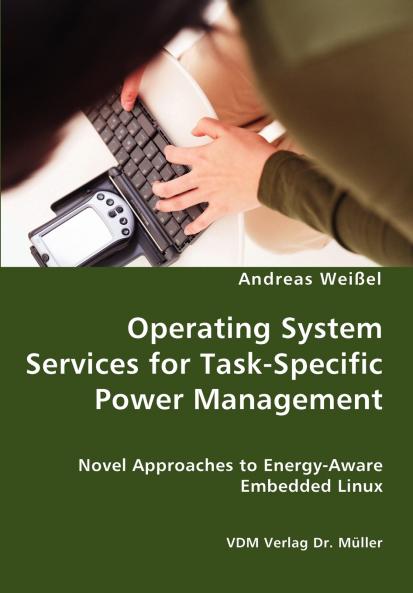
Mobile computing devices like PDAs cell phones or laptops have become anindispensable part of everyday's life. As these systems are battery-poweredand the user expects long operating times energy-aware operation is crucial.Hardware components for mobile devices offer low-power operating modesthat achieve energy savings at the cost of degraded performance or applicationquality e.g. by reducing the CPU speed. This dissertation investigatessoftware-controlled energy management and addresses these two often conflictinggoals: increasing the embedded system's runtime by saving energyand providing sufficient application quality. With a cooperative approach betweenthe operating system and individual applications or the user task-specifictrade-offs between these goals can be made. Prototype implementationsfor embedded Linux are presented and evaluated with energy measurementsproving the feasibility of task-specific power management. This dissertationhas a strong practical focus being a valuable guide for computer scientistsand software engineers both in academia and industry who deal with operatingsystem design and low-power software architectures.

Piracy-free

Assured Quality

Secure Transactions
Details
ISBN 13
9783836425636
Publication Date
-10-09-2007
Pages
-140
Weight
-239 grams
Dimensions
-170x244x7.62 mm
