


by
W. Herr
English



Paperback
₹1693
₹1863
9.13% OFF
(All inclusive*)
Delivery Options
Please enter pincode to check delivery time.
*COD & Shipping Charges may apply on certain items.
Review final details at checkout.
Looking to place a bulk order? SUBMIT DETAILS

Piracy-free

Assured Quality

Secure Transactions
About The Book
Description
Author
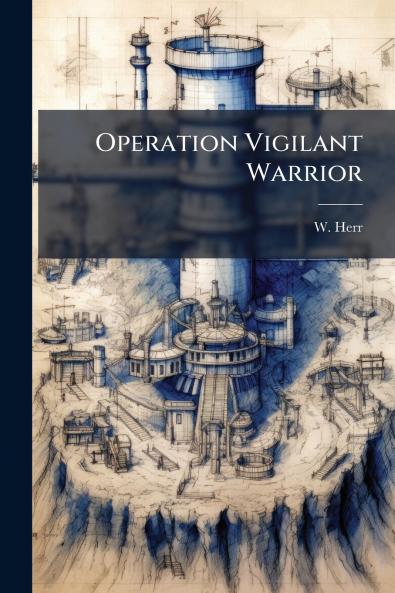
<p>This thesis examines Operation Vigilant Warrior the United States response to the movement of two Iraqi armored divisions toward the Kuwaiti border during the first week of October 1994 to better prepare defense planners for future crises. The action turned back Iraq's aggression and provided insight into options for crisis resolution. The research begins with a general examination of the Iraq-Kuwait conflict and the reconstruction of the events beginning with US detection of the Iraqi movement and ending with their withdrawal and the demobilization of US forces. Primary research sources included interviews official press releases and domestic and foreign periodicals. These combined with secondary sources and theoretical works lead to the conclusion that US conventional deterrence doctrine should be updated to reflect the deterrence lessons of Vigilant Warrior. The work proposes a four element model for effective deterrence based on power agility intent and resolve. These measures should be applied with the knowledge that deterrence is based on the perceptions and values of the target decision-maker(s) and that deterrence in crisis situations is related to the general conditions of deterrence before crises erupt. Increased use of remote sensors and digital data distribution combined with skilled human analysis may allow US conventional deterrence forces to rely more on agility than on their latent power. An agile deterrence strategy may be the most effective route to stability in future regional crises.</p><p>This work has been selected by scholars as being culturally important and is part of the knowledge base of civilization as we know it. This work was reproduced from the original artifact and remains as true to the original work as possible. Therefore you will see the original copyright references library stamps (as most of these works have been housed in our most important libraries around the world) and other notations in the work.</p><p>This work is in the public domain in the United States of America and possibly other nations. Within the United States you may freely copy and distribute this work as no entity (individual or corporate) has a copyright on the body of the work.</p><p>As a reproduction of a historical artifact this work may contain missing or blurred pages poor pictures errant marks etc. Scholars believe and we concur that this work is important enough to be preserved reproduced and made generally available to the public. We appreciate your support of the preservation process and thank you for being an important part of keeping this knowledge alive and relevant.</p>
Piracy-free
Assured Quality
Secure Transactions
Delivery Options
Please enter pincode to check delivery time.
*COD & Shipping Charges may apply on certain items.
Review final details at checkout.
Details
ISBN 13
9781288280438
Publication Date
-12-11-2012
Pages
-80
Weight
-128 grams
Dimensions
-156x234x4.31 mm
