


English



Paperback
₹1709
₹1853
7.77% OFF
(All inclusive*)
Delivery Options
Please enter pincode to check delivery time.
*COD & Shipping Charges may apply on certain items.
Review final details at checkout.
Looking to place a bulk order? SUBMIT DETAILS

Piracy-free

Assured Quality

Secure Transactions
About The Book
Description
Author
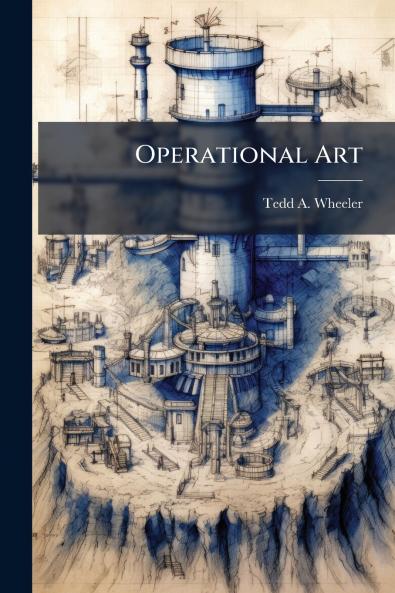
<p>The challenge is in deciding what to automate (effective use of technology) and what remains a human function. The 1999 US National Security Strategy emphasizes the importance of information technology. However the decisive point of all future military operations will continue to be the men and women of the armed services. Achieving a proper balance between technology and people is critical to our nation's security. The goal of this research was to answer the research question: are there Information Technology Leverage Points within Operational Art? The research methodology has two phases. The research first defines a conceptual model using Senge's Systems Thinking theory. Senge has designed a blueprint for an organization where people expand their capacity to create results they truly desire where new and expansive patterns of thinking are nurtured and where collective aspiration is set free. Systems Thinking is a conceptual framework a body of knowledge and tools that has been developed to make full patterns clearer and to help us see how to change them effectively. Looking at Operational Art as a system provides an opportunity to analyze processes decision points and points of data input and output. This systems analysis allowed the researcher to apply his individual and battle staff (group) perspectives during multiple operational and tactical exercises throughout the Command and General Staff College (CGSC) and the School for Advanced Military Studies (SAMS) academic years. The answer to the research question is yes there are information technology leverage points within operational art but not as many as initially anticipated. Throughout the published works on the concept of decision support technology and the integration of information technology to help people make decisions a common finding is that the human mind is an amazing tool. Through the use of intuition mental models and experience humans are able to sort through reasonable amounts of in</p><p>This work has been selected by scholars as being culturally important and is part of the knowledge base of civilization as we know it. This work was reproduced from the original artifact and remains as true to the original work as possible. Therefore you will see the original copyright references library stamps (as most of these works have been housed in our most important libraries around the world) and other notations in the work.</p><p>This work is in the public domain in the United States of America and possibly other nations. Within the United States you may freely copy and distribute this work as no entity (individual or corporate) has a copyright on the body of the work.</p><p>As a reproduction of a historical artifact this work may contain missing or blurred pages poor pictures errant marks etc. Scholars believe and we concur that this work is important enough to be preserved reproduced and made generally available to the public. We appreciate your support of the preservation process and thank you for being an important part of keeping this knowledge alive and relevant.</p>
Piracy-free
Assured Quality
Secure Transactions
Delivery Options
Please enter pincode to check delivery time.
*COD & Shipping Charges may apply on certain items.
Review final details at checkout.
Details
ISBN 13
9781288294732
Publication Date
-13-11-2012
Pages
-64
Weight
-106 grams
Dimensions
-156x234x3.47 mm
