


English



Paperback
₹1689
₹1852
8.8% OFF
(All inclusive*)
Delivery Options
Please enter pincode to check delivery time.
*COD & Shipping Charges may apply on certain items.
Review final details at checkout.
Looking to place a bulk order? SUBMIT DETAILS
Delivery Options
Please enter pincode to check delivery time.
*COD & Shipping Charges may apply on certain items.
Review final details at checkout.
About The Book
Description
Author
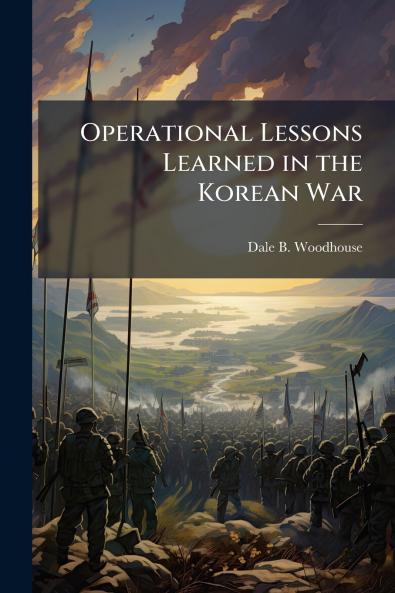
<p>More than 60 years since the outbreak of war on the Korean Peninsula the United States Armed Forces continue to stand by the soldiers sailors airmen and marines of the Republic of Korea in an effort to deter further North Korean aggression. The purpose of this monograph is capture operational lessons learned during the Korean War that should be taken into consideration by operational planners as they prepare for future conflict on the peninsula. Looking at the Korean Peninsula's geography weather and terrain and place in the world highlight unique challenges operational planners will face. The strategic context of North Korea's proximity and alliance to China is important to understand and take into consideration during any operation in the region. China considers North Korea as a buffer protecting its region of Manchuria. Encroachment of this border by foreign forces is a threat to Chinese sovereignty. China's continued support of the North Korean regime is essential to their survival and must always frame the operational environment. The Korean Peninsula is subject to weather extremes such as monsoons and harsh winters that have a direct impact on operations. During the winter of 1950-1951 marines and soldiers faced sub-zero temperatures and heavy snowfall that blocked mountain passes and clogged main supply routes. Fifty years later soldiers and airmen serving in Korea experienced another such harsh winter that limited operations because of heavy snowfall and had an impact their ability to respond to threats from the north. The reason that weather has such an operational impact is because of the restrictive terrain found on the peninsula. The Korean Peninsula is primarily mountainous with most valleys running north to south and having limited east west cross mobility corridors. In the north limited infrastructure such as road networks and expressways compounds the problem. Add to this population centers based around crossroads along the valley flo</p><p>This work has been selected by scholars as being culturally important and is part of the knowledge base of civilization as we know it. This work was reproduced from the original artifact and remains as true to the original work as possible. Therefore you will see the original copyright references library stamps (as most of these works have been housed in our most important libraries around the world) and other notations in the work.</p><p>This work is in the public domain in the United States of America and possibly other nations. Within the United States you may freely copy and distribute this work as no entity (individual or corporate) has a copyright on the body of the work.</p><p>As a reproduction of a historical artifact this work may contain missing or blurred pages poor pictures errant marks etc. Scholars believe and we concur that this work is important enough to be preserved reproduced and made generally available to the public. We appreciate your support of the preservation process and thank you for being an important part of keeping this knowledge alive and relevant.</p>

Piracy-free

Assured Quality

Secure Transactions

Fast Delivery

Sustainably Printed
Details
ISBN 13
9781288295944
Publication Date
-13-11-2012
Pages
-62
Weight
-103 grams
Dimensions
-156x234x3.37 mm
