

English


Hardback
₹12695
₹12849
1.2% OFF
(All inclusive*)
Delivery Options
Please enter pincode to check delivery time.
*COD & Shipping Charges may apply on certain items.
Review final details at checkout.
Looking to place a bulk order? SUBMIT DETAILS
Delivery Options
Please enter pincode to check delivery time.
*COD & Shipping Charges may apply on certain items.
Review final details at checkout.
About The Book
Description
Author
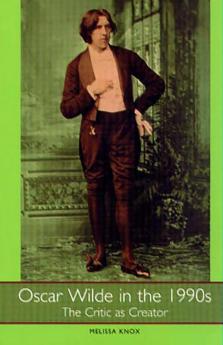
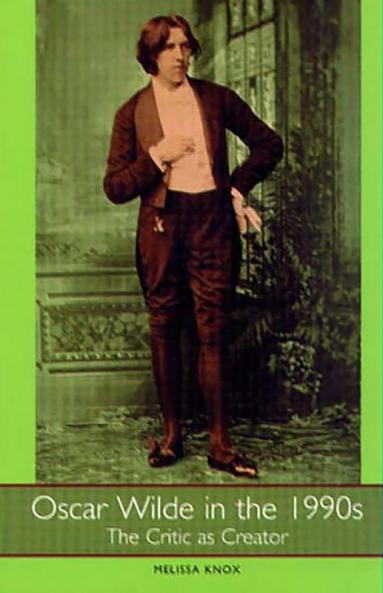
In 1891 Oscar Wilde defined 'the highest criticism' as 'the record of one's own soul and insisted that only by 'intensifying his own personality' could the critic interpret the personality and work of others. This book explores what Wilde meant by that statement arguing that it provides the best standard for judging literary criticism about Wilde a century after his death. Melissa Knox examines a range of Wilde criticism in English -- including the work of Lawrence Danson Michael Patrick Gillespie Ed Cohen and Julia Prewitt Brown. Applying Wilde's standards to his critics Knox discovers that the best of them take to heart Wilde's idea of the aim of criticism -- 'to see the object as in itself it really is not.' By this Wilde appreciates Walter Pater's profound observation that everyone sees through a 'thick wall of personality' and that therefore objectivity as conceived by Matthew Arnold does not exist. Admiring Pater Wilde became a prophet for Freud his exact contemporary. Their intellectual sympathies made obvious in Knox's exegesis help to make the case for Wilde as a modern not a Victorian.Melissa Knox's book Oscar Wilde: A Long and Lovely Suicide was published in 1994. She teaches at St. Peters College in New Jersey.

Piracy-free

Assured Quality

Secure Transactions

Fast Delivery

Sustainably Printed
Details
ISBN 13
9781571130426
Publication Date
-01-09-2001
Pages
-232
Weight
-408 grams
Dimensions
-152x229x17.46 mm
