


English



Hardback
₹18369
₹23553
22.01% OFF
(All inclusive*)
Delivery Options
Please enter pincode to check delivery time.
*COD & Shipping Charges may apply on certain items.
Review final details at checkout.
Looking to place a bulk order? SUBMIT DETAILS
Delivery Options
Please enter pincode to check delivery time.
*COD & Shipping Charges may apply on certain items.
Review final details at checkout.
About The Book
Description
Author
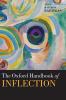
This is the latest addition to a group of handbooks covering the field of morphology alongside <em>The Oxford Handbook of Case </em>(2008) <em>The Oxford Handbook of Compounding </em>(2009) and <em>The Oxford Handbook of Derivational Morphology</em> (2014). It provides a comprehensive state-of-the-art overview of work on inflection - the expression of grammatical information through changes in word forms. The volume's 24 chapters are written by experts in the field from a variety of theoretical backgrounds with examples drawn from a wide range of languages. <p/>The first part of the handbook covers the fundamental building blocks of inflectional form and content: morphemes features and means of exponence. Part 2 focuses on what is arguably the most characteristic property of inflectional systems paradigmatic structure and the non-trivial nature of the mapping between function and form. The third part deals with change and variation over time and the fourth part covers computational issues from a theoretical and practical standpoint. Part 5 addresses psycholinguistic questions relating to language acquisition and neurocognitive disorders. The final part is devoted to sketches of individual inflectional systems illustrating a range of typological possibilities across a genetically diverse set of languages from Africa Asia and the Pacific Australia Europe and South America.<br>

Piracy-free

Assured Quality

Secure Transactions

Fast Delivery

Sustainably Printed
Details
ISBN 13
9780199591428
Publication Date
-01-09-2015
Pages
-714
Weight
-1237 grams
Dimensions
-170x244x38.1 mm
