


English



₹17597
(All inclusive*)
Hardback
Delivery Options
Please enter pincode to check delivery time.
*COD & Shipping Charges may apply on certain items.
Review final details at checkout.
Looking to place a bulk order? SUBMIT DETAILS
Delivery Options
Please enter pincode to check delivery time.
*COD & Shipping Charges may apply on certain items.
Review final details at checkout.
About The Book
Description
Author
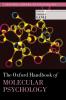
Determining the biological bases for behavior and the extent to which we can observe and explain their neural underpinnings requires a bold broadly defined research methodology. The interdisciplinary entries in this handbook are organized around the principle of molecular psychology which unites cutting-edge research from such wide-ranging disciplines as clinical neuroscience and genetics psychology behavioral neuroscience and neuroethology. For the first time in a single volume leaders in diverse research areas use molecular approaches to investigate social behavior psychopathology emotion cognition and stress in healthy volunteers patient populations and an array of non-human species including rodents insects fish and non-human primates. Chapters draw on molecular methods covering candidate genes genome-wide association studies copy number variations gene expression studies and epigenetics while addressing the ethical legal and social issues to emerge from this new and exciting research approach.

Piracy-free

Assured Quality

Secure Transactions

Fast Delivery

Sustainably Printed
Details
ISBN 13
9780199753888
Publication Date
-18-02-2015
Pages
-478
Weight
-948 grams
Dimensions
-178x254x26.99 mm
