

English


₹15532
(All inclusive*)
Hardback
Delivery Options
Please enter pincode to check delivery time.
*COD & Shipping Charges may apply on certain items.
Review final details at checkout.
Looking to place a bulk order? SUBMIT DETAILS
Delivery Options
Please enter pincode to check delivery time.
*COD & Shipping Charges may apply on certain items.
Review final details at checkout.
About The Book
Description
Author(s)
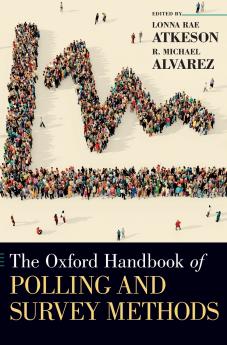
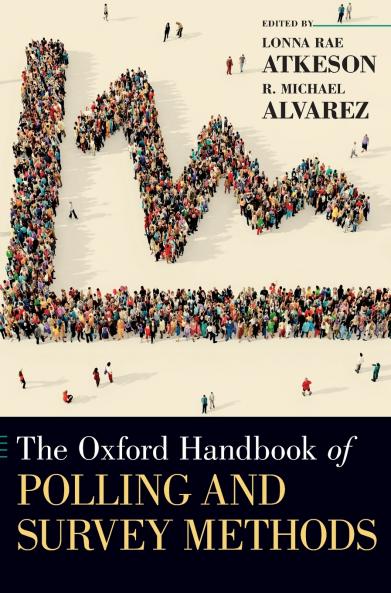
The methodologies used to study public opinion are now in flux. The primary polling method of the last half-century the telephone survey is rapidly becoming obsolete as a data collection method. At the same time new methods of contacting potential respondents and obtaining their response are appearing providing a variety of options for scholars and practitioners. Generally speaking we are moving from a polling world that was largely interviewer driven over the phone and face-to-face to predominantly interviewer driven self-administered poll environments New methods of data collection however must still deal with fundamental questions to polling methodology and total survey error including sampling selection bias non-response error poststratification weighting and questionnaire design features. <p/><em>The Oxford Handbook on Polling and Survey Methods</em> brings together a unique mixture of academics and practitioners from various backgrounds academic disciplines and experiences. In some sense this is reflective of the interdisciplinary nature of the polling and survey industry: polls and surveys are widely used in academia government and the private sector. Designing implementing and analyzing high quality accurate and cost-effective polls and surveys requires a combination of skills and methodological perspectives. Despite the well-publicized issues that have cropped up in recent political polling a great deal is known today about how to collect high quality polling and survey data even in complex and difficult environments. Divided into four main sections the <em>Handbook </em>draws on the existing research and explores data collection methods. It then addresses data analysis and the methods available for combining polling data with other types of data. The next section covers analytic issues including the new approaches to studying public opinion (ie social media the analysis of open-ended questions using text analytic tools and data imputation). The final section focuses on the presentation of polling results an area where there is a great deal of innovation. <p/>A comprehensive overview of the topic this volume highlights current polling trends provides ideas for the development of new and better approaches for measuring modeling and visualizing public opinion and social behavior.<br>

Piracy-free

Assured Quality

Secure Transactions

Fast Delivery

Sustainably Printed
Details
ISBN 13
9780190213299
Publication Date
-22-08-2018
Pages
-668
Weight
-1166 grams
Dimensions
-170x244x36.51 mm
