


by
Tim Zahn
English



₹1687
₹1845
8.56% OFF
(All inclusive*)
Paperback
Delivery Options
Please enter pincode to check delivery time.
*COD & Shipping Charges may apply on certain items.
Review final details at checkout.
Looking to place a bulk order? SUBMIT DETAILS
Delivery Options
Please enter pincode to check delivery time.
*COD & Shipping Charges may apply on certain items.
Review final details at checkout.
About The Book
Description
Author
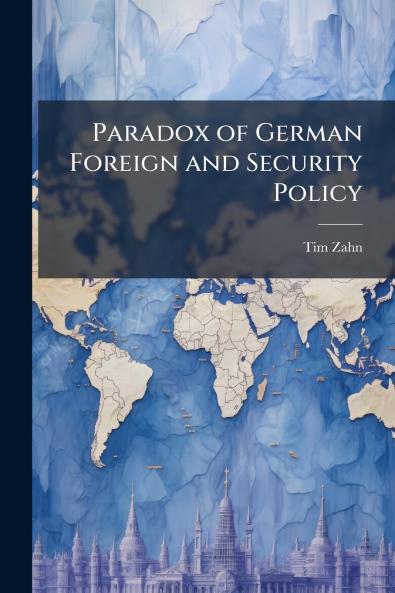
<p>For many countries the finite nature of fossil fuels is a matter of significant security concerns. Producer and consumer countries alike increasingly see energy supply security as a subject of their security and defense policy. Being strategically prepared when market forces fail to balance contradictory interests becomes a necessity for many countries. Based on Germany's dependency on energy imports a prerequisite for a prosperous transition to other sources of energy is to have effective tools of foreign and security policy ready at hand. In this context the deep integration of German security and defense policy into multinational structures often seems to contradict the formulation of national security interests. Domestic discussions evolved around the question which role the Bundeswehr as one element of German security policy should have in securing Germany's supply of fossil fuels and other natural resources. However the discourse on the efficacy of German foreign and security policy in the context of energy supply security is a synonym for a much larger dilemma: the paradox of an administration struggling to achieve valuable national interests in an environment of value loaded divergent public perceptions. Values interests and perceptions are rooted in the ideals of Realism Liberalism and Constructivism. These political theories although not fully explanatory provide the normative framework for the research in this work. Based on either political theory or public survey data the monograph will identify two significant contradictory trends. First that a perceived unfavorable personal economic situation results in an increased rejection of international military engagement is a specific behavioral phenomenon by large parts of the German population. Second an increased acceptance of the use of hard power means in times of material needs is rooted in the mental model of post-materialist theory. The author concludes that in contrast to post-materialis</p><p>This work has been selected by scholars as being culturally important and is part of the knowledge base of civilization as we know it. This work was reproduced from the original artifact and remains as true to the original work as possible. Therefore you will see the original copyright references library stamps (as most of these works have been housed in our most important libraries around the world) and other notations in the work.</p><p>This work is in the public domain in the United States of America and possibly other nations. Within the United States you may freely copy and distribute this work as no entity (individual or corporate) has a copyright on the body of the work.</p><p>As a reproduction of a historical artifact this work may contain missing or blurred pages poor pictures errant marks etc. Scholars believe and we concur that this work is important enough to be preserved reproduced and made generally available to the public. We appreciate your support of the preservation process and thank you for being an important part of keeping this knowledge alive and relevant.</p>

Piracy-free

Assured Quality

Secure Transactions

Fast Delivery

Sustainably Printed
Details
ISBN 13
9781288300570
Publication Date
-15-11-2012
Pages
-52
Weight
-89 grams
Dimensions
-156x234x2.84 mm
