




This Book is Out of Stock!
English




Hardback
₹16064
₹18368
12.54% OFF
(All inclusive*)
Delivery Options
*COD & Shipping Charges may apply on certain items.
Review final details at checkout.
Looking to place a bulk order? SUBMIT DETAILS
*COD & Shipping Charges may apply on certain items.
Review final details at checkout.
₹16064
₹18368
12% OFF
Hardback
Out Of Stock
All inclusive*
About The Book
Description
Author
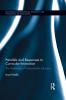
<p>This volume explores two radical shifts in history and subsequent responses in curricular spaces: the move from oral to print culture during the transition between the 15th and 16th centuries and the rise of the Jesuits and the move from print to digital culture during the transition between the 20th and 21st centuries and the rise of what the philosopher Jean Baudrillard called hyperreality.</p><p>The curricular innovation that accompanied the first shift is considered through the rise of the Society of Jesus (the Jesuits). These men created the first global network of education and developed a humanistic curriculum designed to help students navigate a complicated era of the known (human-centered) and unknown (God-centered) universe.</p><p>The curricular innovation that is proposed for the current shift is guided by the question: What should be the role of undergraduate education become in the 21st century? Today the tension between the known and unknown universe is concentrated on the interrelationships between our embodied spaces and our digitally mediated ones. As a result today’s undergraduate students should be challenged to understand how—in the objectively focused commodified STEM-centric landscape of higher education—the human subject is decentered by the forces of hyperreality and in turn how the human subject might be recentered to balance our humanness with the new realities of digital living. </p><p>Therein one finds the possibility of posthumanistic education. </p>

Piracy-free

Assured Quality

Secure Transactions

Fast Delivery

Sustainably Printed
Details
ISBN 13
9780415733793
Publication Date
-13-11-2014
Pages
-154
Weight
-306 grams
Dimensions
-152x229x9.91 mm
