

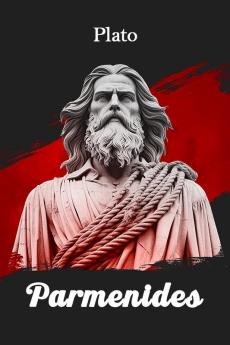
by
Plato
English
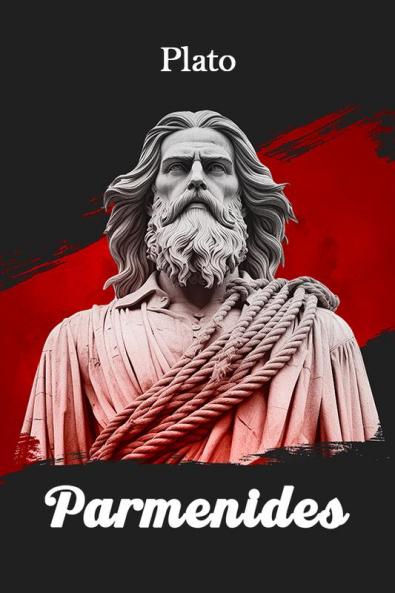



Paperback
₹165
₹199
17.09% OFF
(All inclusive*)
Delivery Options
Please enter pincode to check delivery time.
*COD & Shipping Charges may apply on certain items.
Review final details at checkout.
Looking to place a bulk order? SUBMIT DETAILS

Piracy-free

Assured Quality

Secure Transactions
About The Book
Description
Author
In Plato's Parmenides the dialogue explores profound philosophical questions primarily focusing on the nature of being and non-being. The character Parmenides presents a series of challenging arguments to Socrates questioning the feasibility and coherence of the Theory of Forms. Parmenides argues that if something exists it must be completely unified and unchanging. He suggests that a true being is a singular undivided entity that cannot be differentiated or subdivided. The dialogue contrasts the ideas of the Sophists who often questioned the nature of truth and knowledge with the more rigorous philosophical inquiry presented by Parmenides. Parmenides demonstrates the complexities and potential inconsistencies within the Theory of Forms prompting deeper reflection on the nature of reality and knowledge. The poem addresses human beliefs and perceptions which Parmenides sees as unreliable. These perceptions suggest a reality of change and diversity which he believes are illusions and do not reflect the true nature of Being. Sensory experiences are seen as deceptive as they suggest a world of change and plurality which contradicts the true nature of Being. Parmenides argues that reality is a single unchanging entity and any perception of change or diversity is illusory.
Piracy-free
Assured Quality
Secure Transactions
Delivery Options
Please enter pincode to check delivery time.
*COD & Shipping Charges may apply on certain items.
Review final details at checkout.
Details
ISBN 13
9789365786880
Publication Date
-08-01-2024
Pages
-102
Weight
-131 grams
Dimensions
-140x216x6.07 mm
