

English



₹18468
₹21161
12.73% OFF
(All inclusive*)
Hardback
Delivery Options
Please enter pincode to check delivery time.
*COD & Shipping Charges may apply on certain items.
Review final details at checkout.
Looking to place a bulk order? SUBMIT DETAILS
Delivery Options
Please enter pincode to check delivery time.
*COD & Shipping Charges may apply on certain items.
Review final details at checkout.
About The Book
Description
Author
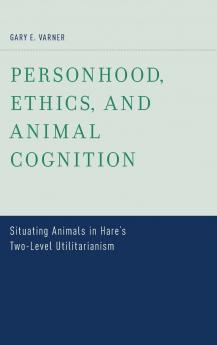
R.M. Hare was one of the most important ethical theorists of the 20th century and one of his graduate students Peter Singer became famous for his writings on animals and personhood. Singer now says that he endorses Hare''s two-level utilitarianism and he has invoked the theory''s distinction between critical thinking and thinking in terms of intuitive level rules in response to certain objections to his conclusions on several issues. Hare however never published a systematic treatment of how his theory applies to issues in animal ethics and he avoided the concept of personhood. Gary Varner here fills this gap by defending the moral legitimacy of distinguishing among persons near-persons and the merely sentient within Harean two-level utilitarianism. He explores the implications of this distinction by applying the resulting ethical system to our treatment of animals and shows how the results contrast with the more abolitionist conclusions reached by Singer on the same issues. In the process he presents a new philosophical defense of two-level utilitarianism and its metaethical foundation (universal prescriptivism) and he significantly expands Hare''s account of how intuitive level rules function in moral thinking based on recent empirical research. The book also draws heavily on empirical research on consciousness and cognition in non-human animals as a way of approaching the question of which animals if any are persons or at least near-persons.Philosophers including those interested in utilitarianism in general or Hare in particular as well as others interested in animal ethics or the debate over personhood will find Varner''s argument of great interest.Professor Varner''s earlier work In Nature''s Interests is a very fine book. It has achieved a high level of respect from those working in the field and is often seen as having set a new standard of debate in environmental ethics. That means that a new book by Professor Varner will be received with considerable interest. Varner draws on extensive recent empirical research regarding the degree to which animals are self-conscious and uses this information as the basis for the most serious discussion I have yet seen of whether any nonhuman animals can be considered ''persons''. There is to my knowledge no other book that goes into these issues anywhere near as deeply in the context of assessing their significance for the normative issues of the wrongness of taking life or other issues relating to ethical decision-making regarding our treatment of animals and some humans. I have no doubt that this book will like In Nature''s Interests be seen as making an important contribution to the topics it covers. - Peter Singer University Center for Human Values Princeton University

Piracy-free

Assured Quality

Secure Transactions

Fast Delivery

Sustainably Printed
Details
ISBN 13
9780199758784
Publication Date
-08-08-2012
Pages
-334
Weight
-568 grams
Dimensions
-156x234x22.23 mm
