


English



Paperback
₹4017
₹4976
19.27% OFF
(All inclusive*)
Delivery Options
Please enter pincode to check delivery time.
*COD & Shipping Charges may apply on certain items.
Review final details at checkout.
Looking to place a bulk order? SUBMIT DETAILS
Delivery Options
Please enter pincode to check delivery time.
*COD & Shipping Charges may apply on certain items.
Review final details at checkout.
About The Book
Description
Author(s)
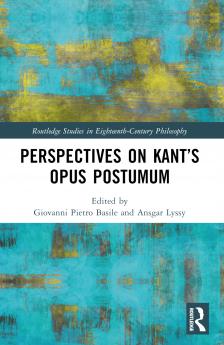
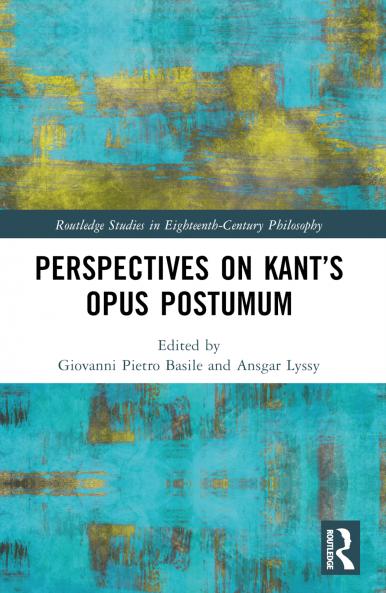
<p>This book offers new perspectives on the theoretical elements of the <i>Opus postumum (OP)</i> Kant’s project of a final work which remained unknown until eighty years after his death. The contributors read the <i>OP </i>as a central work in establishing the relation between Kant’s transcendental philosophy his natural philosophy practical philosophy philosophy of religion metaphysics and his broader epistemology.</p><p>Interpreting the <i>OP </i>is an important task because it helps reveal how Kant himself tried to correct and develop his critical philosophy. It also sheds light on the foundational role of the three <i>Critiques</i> <em>for other philosophical inquiries</em> as well as the unified philosophical system that Kant sought to establish. The chapters in this volume address a range of topics relevant to the epistemological and theoretical problems raised in the <i>OP</i> including the transition from the <i>Metaphysical Foundations of Natural Science</i> to physics as an answer to a deficiency in critical thought; the notion of ether and more specifically its transcendental deduction; self-affection and the self-positing of the subject; and the idea of God and the system of ideas in the highest standpoint of transcendental philosophy.</p><p><i>Perspectives on Kant’s Opus postumum</i> will be of interest to upper-level students and scholars working on Kant.</p>

Piracy-free

Assured Quality

Secure Transactions

Fast Delivery

Sustainably Printed
Details
ISBN 13
9780367548681
Publication Date
-26-08-2024
Pages
-240
Weight
-331 grams
Dimensions
-151.89x229.11x12.93 mm
