



English




Paperback
₹3865
₹4621
16.36% OFF
(All inclusive*)
Delivery Options
Please enter pincode to check delivery time.
*COD & Shipping Charges may apply on certain items.
Review final details at checkout.
Looking to place a bulk order? SUBMIT DETAILS
Delivery Options
Please enter pincode to check delivery time.
*COD & Shipping Charges may apply on certain items.
Review final details at checkout.
About The Book
Description
Author
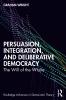
<p>It is easy to be in favor of a government that reflects the will of people you like. It is more difficult to be in favor of a government that reflects the will of people you hate. But this is precisely what democracy requires of us. And one of the most serious threats facing democracy today in the United States and around the world is the discomfort that many citizens feel toward this core democratic principle: that even those citizens we think of as evil deluded or simply wrong should still be allowed a say in what their own government does.</p><p>Perhaps the best hope of resolving this tension can be found in the idea of deliberative democracy which sees a particular form of non-coercive dialogue as an <i>essential </i>component of democratic governance. But in this book Graham Wright argues that the traditional approach to deliberation through <i>persuasion </i>faces serious challenges that may limit its potential in exactly the situations where the threats to democracy are greatest. Instead he argues that an alternative method of deliberation based on the process of “integration” as described by the early 20th-century philosopher Mary Parker Follett can do a better job of navigating these challenges and can help us make democratic decisions that better reflect the will of the <i>whole </i>people.</p><p><em>Persuasion Integration and Deliberative Democracy: The Will of the Whole </em>is a fresh approach to debates about the challenges of democracy and the value of democratic deliberation. For anyone wanting to understand the dangers facing deeply divided societies this is an essential read.</p>

Piracy-free

Assured Quality

Secure Transactions

Fast Delivery

Sustainably Printed
Details
ISBN 13
9781032529646
Publication Date
-31-10-2024
Pages
-188
Weight
-263 grams
Dimensions
-151.89x229.11x10.26 mm
