

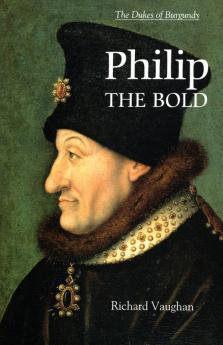
English
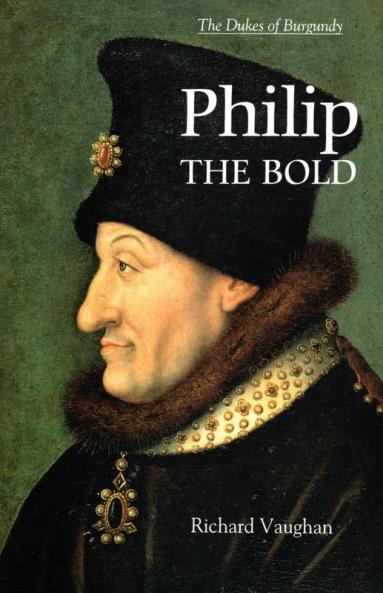


₹3549
(All inclusive*)
Paperback
Delivery Options
Please enter pincode to check delivery time.
*COD & Shipping Charges may apply on certain items.
Review final details at checkout.
Looking to place a bulk order? SUBMIT DETAILS
Delivery Options
Please enter pincode to check delivery time.
*COD & Shipping Charges may apply on certain items.
Review final details at checkout.
About The Book
Description
Author(s)
<p>Boydell &amp; Brewer does a major service by the simultaneous reissue of Richard Vaughan&#39;s studies of the Valois Dukes of Burgundy. Four distinguished scholars add extra value by contributing an introductory chapter for each ducal reign surveying its historiography since the original publication... The story which Vaughan tells with verve has its full share of dramatic turns(: ) this is much more though than simply a narrative history; Vaughan&#39;s meticulous explorations of the administrative and financial structures that underpinned ducal authority and of the court and its culture are integral to his exposition (...) His achievement remains monumental. There are no comparable modern in-depth studies of these four larger-than-life players on the late medieval European stage in English or in any other language. They are besides eminently readable. Maurice Keen TIMES LITERARY SUPPLEMENT When in 1363 the duke of Burgundy died without an heir the duchy returned to the French crown. John II&#39;s decision to give it to his fourth son Philip had some logic behind it given the independence of the inhabitants; but in so doing he created the basis for a power which was to threaten France&#39;s own existence in the following century and which was to become one of the most influential and glittering courts of Europe. Much of this was due to the character of Philip the Bold; by marrying the daughter of the count of Flanders he inherited the wealth of the great Flemish towns in 1384 and the union of the two great fiefdoms to the north and east of France under one ruler meant that the resources of the duke of Burgundy were as great as those of the kingdom itself. From 1392 onwards he was at loggerheads with the regent of France his brother Louis duke of Orleans and this schism was to prove fatal to the kingdom weakening the administration and leading to the French defeat by Henry V in 1415. Richard Vaughan describes the process by which Philip fashioned this new power in particular his administrative techniques; but he also gives due weight to the splendours of the new court in the sphere of the arts and records the history of its one disastrous failure the crusade of Nicopolis in 1396. He also offers a portrait of Philip himself energetic ambitious and shrewd the driving force behind the new duchy and its rapid rise to an influential place among the courts of Europe.</p>

Piracy-free

Assured Quality

Secure Transactions

Fast Delivery

Sustainably Printed
Details
ISBN 13
9780851159157
Publication Date
-01-02-2011
Pages
-320
Weight
-378 grams
Dimensions
-140x216x17 mm
