


English


Paperback
₹1427
₹1469
2.86% OFF
(All inclusive*)
Delivery Options
Please enter pincode to check delivery time.
*COD & Shipping Charges may apply on certain items.
Review final details at checkout.
Looking to place a bulk order? SUBMIT DETAILS

Piracy-free

Assured Quality

Secure Transactions
About The Book
Description
Author
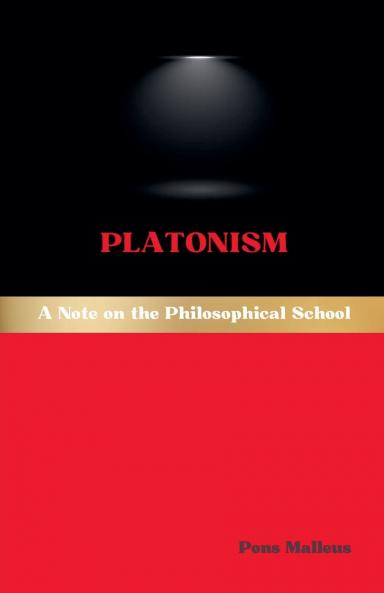
<p>Platonism one of the most enduring and influential philosophical traditions in Western thought began over two millennia ago in the intellectual ferment of Classical Athens. What started as the teachings of one man-Plato-soon evolved into a rich complex lineage of inquiry that spanned centuries inspired generations and left an indelible mark on metaphysics epistemology ethics politics and theology. This book is a journey through that tradition focusing not only on Plato's original insights but also on the dynamic evolution of Platonism through the Old Middle and New Academies.</p><p>The story begins with Plato himself whose dialogues remain among the most enigmatic and profound writings in the history of philosophy. Rather than presenting a system of doctrines Plato invites his readers into a dialectical process-one that seeks truth through dialogue introspection and reason. At the heart of his philosophy is the Theory of Forms an ontology that posits eternal unchanging realities behind the shifting appearances of the sensible world. In his Academy the first institution of higher learning in the West Plato laid the foundation for what would become a vibrant school of thought-a community of thinkers bound by shared questions methods and ideals.</p><p>The Old Academy led by Plato's immediate successors such as Speusippus and Xenocrates preserved and extended his teachings. While remaining loyal to many of his central ideas members of the Old Academy explored mathematical and metaphysical systems in ways that both clarified and transformed their master's thought. These early successors sought to systematize Plato's vision often emphasizing the unity and intelligibility of reality and developing proto-scholastic structures that would later influence Neoplatonism and even medieval Christian philosophy.</p><p>Over time however the certainty that marked the Old Academy gave way to the skepticism of the Middle Academy particularly under the leadership of Arcesilaus. Confronted by the limits of knowledge and the fallibility of sense experience Arcesilaus reoriented the Academy toward a more critical Socratic stance. Emphasizing the impossibility of certain knowledge he returned to the questioning spirit of Socrates making doubt and inquiry central virtues of philosophy. The Middle Academy in this respect represents a philosophical shift: not a rejection of Plato but a deepening of his method-placing dialectic above doctrine.</p><p>The New Academy beginning with Carneades continued this skeptical trajectory while engaging rigorously with contemporary Stoic and Epicurean thought. Carneades a masterful dialectician challenged prevailing dogmas by arguing both for and against propositions with equal force exposing the epistemic limits of human cognition. Yet even in this radical skepticism a Platonic impulse endured: the commitment to reasoned debate ethical responsibility and the pursuit of a higher understanding-even if that understanding remained elusive.</p><p>This book does not seek to settle debates within Platonism but to illuminate its internal diversity evolution and enduring relevance. It follows the transformation of Platonic thought from metaphysical realism to epistemic humility showing how each phase of the Academy responded to its historical context while maintaining a philosophical continuity rooted in the life and teachings of Plato.</p><p>In tracing these developments the reader will see not just a linear progression but a dynamic conversation-between belief and doubt system and critique unity and plurality. Platonism in all its forms teaches us that philosophy is not merely a set of answers but a way of asking questions that remain vital across the centuries.</p>
Piracy-free
Assured Quality
Secure Transactions
Delivery Options
Please enter pincode to check delivery time.
*COD & Shipping Charges may apply on certain items.
Review final details at checkout.
Details
ISBN 13
9798233329272
Publication Date
-22-12-2025
Pages
-86
Weight
-113 grams
Dimensions
-140x216x4.52 mm
