

English


₹3019
₹3040
0.69% OFF
(All inclusive*)
Paperback
Delivery Options
Please enter pincode to check delivery time.
*COD & Shipping Charges may apply on certain items.
Review final details at checkout.
Looking to place a bulk order? SUBMIT DETAILS
Delivery Options
Please enter pincode to check delivery time.
*COD & Shipping Charges may apply on certain items.
Review final details at checkout.
About The Book
Description
Author
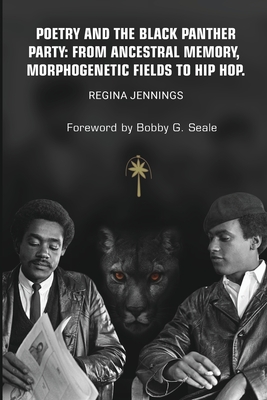
<p>As a member of the original Black Panther Party for Self-Defense I have never forgotten how much that organization advanced my intellectual understanding of the dynamics of America and the world. <strong>Poetry and the Black Panther Party: from Ancestral Memory Morphogenetic Fields to Hip Hop is </strong>my literary tribute to that mind awakening organization. Thus this book is a <strong><em>literary tribute to the brave founders and members of the Black Panther organization who published poems they wrote in the Black Panther newspaper.</em></strong> By explicating this poetry using links to African thought and philosophy as well as physics I have accomplished four intentions: the first to present this body of literature to contemporary audiences; secondly to follow a dictate of Malcolm X which is to connect Black America to Africa in all possible ways; thirdly to unearth American Black literature to academic and lay audiences; and fourthly to show Black Panthers as artists minus the guns.</p><p><br></p><p>To add artistry to the Black Panther legacy broadens the Panthers' humanity which is normally confined to halting police brutality a chronic problem in Black America. Yet along with the Panthers' unique approach to solving that dilemma explicating Panther poetry highlights the African and African-American literary traditions and shows how the originators Bobby G. Seale and Huey P. Newton together founded a unique American organization which still inspires people locally and globally today. Seale and Newton were working class Black men who started their own newspaper and instituted a plethora of community-based programs using solely Black community resources. They were also cultural consumers who relished in the profound elements of Black music and Black poetry and in <strong>Poetry and the Black Panther Party: from Ancestral Memory Morphogenetic Fields to Hip Hop</strong> I catalog how Panther poetry has roots and remedies in ancient African culture. In doing so in particular for Black Americans and those on the African continent I have conjoined and resurfaced a buried history alive in contemporary culture. </p>

Piracy-free

Assured Quality

Secure Transactions

Fast Delivery

Sustainably Printed
Details
ISBN 13
9781087938523
Publication Date
-31-08-2019
Pages
-428
Weight
-577 grams
Dimensions
-152x229x24.19 mm
