

English


Paperback
₹8034
₹10611
24.29% OFF
(All inclusive*)
Delivery Options
Please enter pincode to check delivery time.
*COD & Shipping Charges may apply on certain items.
Review final details at checkout.
Looking to place a bulk order? SUBMIT DETAILS
Delivery Options
Please enter pincode to check delivery time.
*COD & Shipping Charges may apply on certain items.
Review final details at checkout.
About The Book
Description
Author
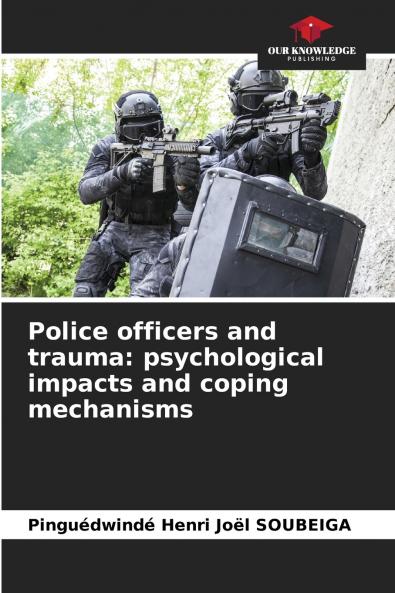
This book plunges into the psychological world of Burkinabe police officers confronted with critical incidents. Through an in-depth qualitative study it examines the traumatic consequences of their exposure to extreme events in an institutional context devoid of formal psychological support mechanisms. The study is based on a methodology combining semi-structured interviews and three internationally recognized psychometric tests: the TraumaQ (trauma assessment) the WCC (coping strategies) and the DSQ-40 (defense mechanisms). The analysis focuses on two cases of police officers who survived a terrorist ambush together during an operation. The results reveal a correlation between the psychological mechanisms mobilized and the degree of resilience. While one subject showed relatively unaffected adaptation thanks to problem-focused coping strategies and mature defenses the other showed marked decompensation characterized by alternating coping styles and the use of the full range of defensive mechanisms.

Piracy-free

Assured Quality

Secure Transactions

Fast Delivery

Sustainably Printed
Details
ISBN 13
9786208875688
Publication Date
-16-07-2025
Pages
-68
Weight
-106 grams
Dimensions
-152x229x4.14 mm
