

English


₹7876
(All inclusive*)
Paperback
Delivery Options
Please enter pincode to check delivery time.
*COD & Shipping Charges may apply on certain items.
Review final details at checkout.
Looking to place a bulk order? SUBMIT DETAILS
Delivery Options
Please enter pincode to check delivery time.
*COD & Shipping Charges may apply on certain items.
Review final details at checkout.
About The Book
Description
Author
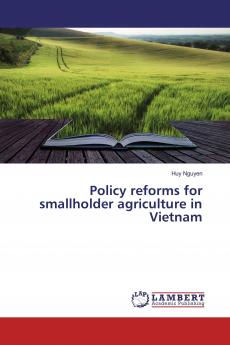
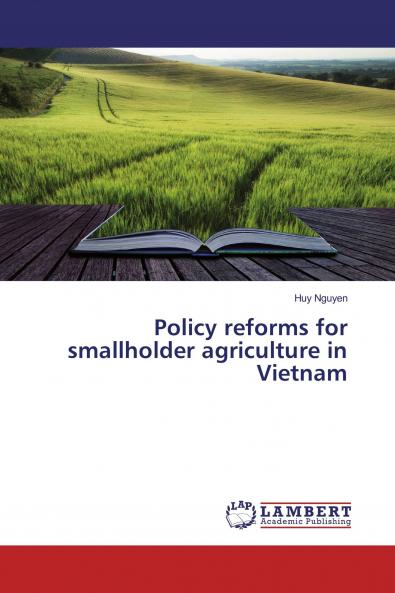
During Vietnam’s thirty years of economic growth since 1986 government policies have been central in raising rice production and export. However the relevance of the ‘rice first’ policy and the place of smallholder agriculture have recently been questioned in the discussion on Vietnam’s agricultural development strategy. The objective of this book is to contribute to designing appropriate agricultural development strategies for Vietnam based on empirical analysis at the farm household level. In light of increasing rural wages and structural change Vietnam’s agricultural transformation replicates the early East Asian experience characterised by the dominance of smallholder agriculture. There has so far been no definitive policy resolution of the optimal structure of Vietnam’s smallholder agriculture. The balance between efficiency and equity between lowering production costs and raising prices is a challenge for policy makers. The findings suggest policies for maintaining the comparative advantage of agriculture. The government should relax the ‘rice first’ policy to improve household welfare. In addition land reforms responding to less labour-intensive farming

Piracy-free

Assured Quality

Secure Transactions

Fast Delivery

Sustainably Printed
Details
ISBN 13
9786138068433
Publication Date
-16-02-2018
Pages
-272
Weight
-354 grams
Dimensions
-150x220x14.57 mm
