



by
English



Paperback
₹2855
₹3189
10.47% OFF
(All inclusive*)
Delivery Options
Please enter pincode to check delivery time.
*COD & Shipping Charges may apply on certain items.
Review final details at checkout.
Looking to place a bulk order? SUBMIT DETAILS

Piracy-free

Assured Quality

Secure Transactions
About The Book
Description
Author
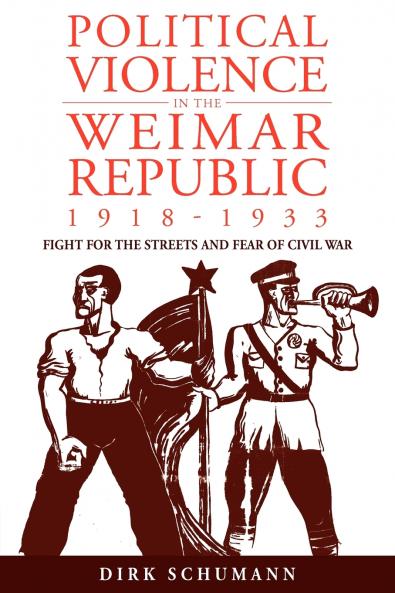
<p> <strong>A comprehensive analysis of political violence in Weimar Germany with particular emphasis on the political culture from which it emerged.</strong></p><p> Today's readers living in what Charles Maier calls 'a new epoch of vanished reassurance' will find this book absorbing and troubling.-<em>The Historian</em></p><p> The Prussian province of Saxony-where the Communist uprising of March 1921 took place and two Combat Leagues (Wehrverbände) were founded (the right-wing Stahlhelm and the Social Democratic Reichsbanner)-is widely recognized as a politically important region in this period of German history. Using a case study of this socially diverse province this book refutes both the claim that the Bolshevik revolution was the prime cause of violence and the argument that the First World War's all-encompassing brutalization doomed post-1918 German political life from the very beginning. The study thus contributes to a view of the Weimar Republic as a state in severe crisis but with alternatives to the Nazi takeover.</p><p> <em>From the introduction:<br /> After the phase of civil war political violence assumed a distinctly limited form. It was no longer aimed at killing or wounding as many opponents as possible; instead it served political parties and organizations as an instrument for exerting pressure in the struggle over control of the street. This development was driven by the Combat Leagues (Wehrverbände) of all political camps who with their uniforms and marches injected militaristic elements into the political culture. However since the violence they perpetrated followed a political and not a military logic it was as I will show in principle controllable and did not pose a fundamental threat to the political order not even in 1932 that particularly turbulent year before Hitler's assumption of power. </em></p>
Piracy-free
Assured Quality
Secure Transactions
Delivery Options
Please enter pincode to check delivery time.
*COD & Shipping Charges may apply on certain items.
Review final details at checkout.
Details
ISBN 13
9780857453143
Publication Date
-01-04-2012
Pages
-400
Weight
-540 grams
Dimensions
-152x229x20.86 mm
