


English



₹12909
₹16631
22.38% OFF
(All inclusive*)
Hardback
Delivery Options
Please enter pincode to check delivery time.
*COD & Shipping Charges may apply on certain items.
Review final details at checkout.
Looking to place a bulk order? SUBMIT DETAILS
Delivery Options
Please enter pincode to check delivery time.
*COD & Shipping Charges may apply on certain items.
Review final details at checkout.
About The Book
Description
Author
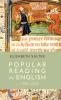
<p>This book is about reading practice and experience in late medieval and early modern England. It focuses on the kinds of literatures that were more readily available to the widest spectrum of the population. Four case studies from many possibilities have been selected each examining a particular type of popular literature under the headings 'religious' 'moral' 'practical' and 'fictional'. A key concern of the book is how we might use particular types of evidence in order to understand more about reading practice and experience so issues of method and approach are discussed fully in the opening chapter.<br><br>One distinctive element of this book is that it attempts to uncover evidence for the reading practices and experiences of real rather than ideal readers using evidence that is found within the material of a book or manuscript itself or within the structure of a specific genre of literature. Salter attempts to negotiate a path through a set of methodological and interpretive issues in order to arrive at a better understanding of how people may have read and what they may have read. This in turn leads on to how we may interpret the evidence that manuscripts and early printed books provide for the ways that medieval and early modern people engaged with reading.<br><br>This book will be of interest to academics and research students who study the history of reading popular culture literacy manuscript and print culture as well as to those interested more generally in medieval and early modern society and culture.</p>

Piracy-free

Assured Quality

Secure Transactions

Fast Delivery

Sustainably Printed
Details
ISBN 13
9780719077999
Publication Date
-01-08-2012
Pages
-276
Weight
-404 grams
Dimensions
-140x216x22.23 mm
