


English


Paperback
₹2621
(All inclusive*)
Delivery Options
Please enter pincode to check delivery time.
*COD & Shipping Charges may apply on certain items.
Review final details at checkout.
Looking to place a bulk order? SUBMIT DETAILS
Delivery Options
Please enter pincode to check delivery time.
*COD & Shipping Charges may apply on certain items.
Review final details at checkout.
About The Book
Description
Author
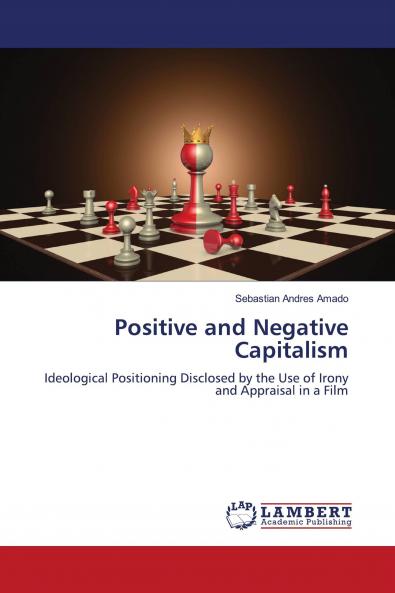
Both forms of interpersonal meanings the use of appraisal and the use of irony take part in an inferential model of communication in which the right inferences or assumptions on the part of the interlocutor are crucial to the success of communication. This research aims to describe various ways of linguistic realization of interpersonal meanings in language use; the purpose of this description is to show that our choice of words may not only transmit ideology but also adhere to hegemonic or dominant discourses. Ideological stance is considered from a Critical Discourse Analysis (CDA) perspective which delves into the dialectal relationship between discursive and social structures (Fairclough 1989). The analytical framework is based on Systemic Functional Linguistics (Halliday 1994; Halliday & Matthiessen 2014) mostly on Appraisal Theory (Martin & Rose 2003; Martin & White 2005). In order to show some different strategies to convey ideology the use of appraisal and irony in Moore’s film Capitalism: A love story (2009) is analysed. Qualitative methods are adopted to analyse the data. Findings show that our lexical choices may disclose an adherence to dominant ideologies.

Piracy-free

Assured Quality

Secure Transactions

Fast Delivery

Sustainably Printed
Details
ISBN 13
9786205529355
Publication Date
-31-01-2023
Pages
-84
Weight
-127 grams
Dimensions
-150x220x4.92 mm
