



This Book is Out of Stock!
English



Hardback
₹9774
₹12794
23.6% OFF
(All inclusive*)
Delivery Options
*COD & Shipping Charges may apply on certain items.
Review final details at checkout.
Looking to place a bulk order? SUBMIT DETAILS

Piracy-free

Assured Quality

Secure Transactions
About The Book
Description
Author
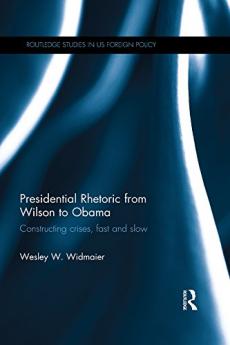
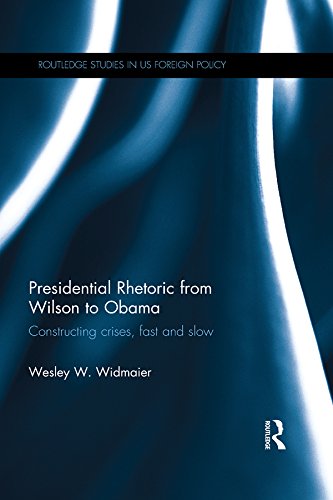
<p>Over the past century presidential constructions of crises have spurred recurring redefinitions of U.S. interests as crusading advance has alternated with realist retrenchment. For example Harry Truman and George W. Bush constructed crises that justified liberal crusades in the Cold War and War on Terror. In turn each was followed by realist successors as Dwight Eisenhower and Barack Obama limited U.S. commitments but then struggled to maintain popular support.</p><p>To make sense of such dynamics this book synthesizes constructivist and historical institutionalist insights regarding the ideational overreactions that spur shifts across crusading excesses and realist counter-reactions. Widmaier juxtaposes what Daniel Kahneman terms the initial fast thinking popular constructions of crises that justify liberal crusades the slow thinking intellectual conversion of such views in realist adjustments and the tensions that can lead to renewed crises. This book also traces these dynamics historically across five periods – as Wilson’s overreach limited Franklin Roosevelt to a reactive pragmatism as Truman’s Cold War crusading incited Eisenhower’s restraint as Kennedy-Johnson Vietnam-era crusading led to Nixon’s revived realism as Reagan’s idealism yielded to a Bush-Clinton pragmatism and as George W. Bush’s crusading was followed by Obama’s restraint. Widmaier concludes by addressing theoretical debates over punctuated change historical debates over the scope for consensus and policy debates over populist or intellectual excesses.</p><p>This work will be of great interest to students and scholars of U.S. Foreign Policy</p>
Piracy-free
Assured Quality
Secure Transactions
*COD & Shipping Charges may apply on certain items.
Review final details at checkout.
₹9774
₹12794
23% OFF
Hardback
Out Of Stock
All inclusive*
Details
ISBN 13
9781138790902
Publication Date
-14-11-2014
Pages
-162
Weight
-332 grams
Dimensions
-156x234x10.32 mm
