


English



Paperback
₹2880
(All inclusive*)
Delivery Options
Please enter pincode to check delivery time.
*COD & Shipping Charges may apply on certain items.
Review final details at checkout.
Looking to place a bulk order? SUBMIT DETAILS

Piracy-free

Assured Quality

Secure Transactions
About The Book
Description
Author
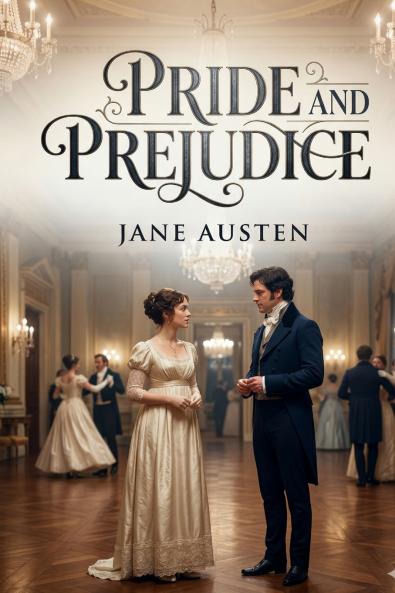
<p>Pride and Prejudice&nbsp;is the second published novel (but third to be written) by English author&nbsp;Jane Austen written when she was aged 20-21 and later published in 1813.</p><p>A&nbsp;novel of manners it follows the character development of&nbsp;Elizabeth Bennet the&nbsp;protagonist&nbsp;of the book who learns about the repercussions of hasty judgments and comes to appreciate the difference between superficial goodness and actual goodness.</p><p>Her father&nbsp;Mr Bennet owner of the Longbourn estate in&nbsp;Hertfordshire has five daughters; but this estate is&nbsp;entailed&nbsp;by a&nbsp;strict settlement[1]&nbsp;that Mr Bennet entered into when coming of age so now can only be inherited in the male line. His wife brought a settlement[2]&nbsp;of £5000 into the marriage as her 'separate estate' and has since inherited an additional £4000 on the death of her father; but Mrs Bennet and her daughters face living only on the interest from these sums upon Mr Bennet's death. To his regret he has failed to save out of the income from the Longbourn estate to provide enhanced marriage portions for his daughters. From the Bennets' perspective it is imperative that at least one of their daughters marry well to support the others which is a primary motivation driving the plot.</p><p>Pride and Prejudice&nbsp;has consistently appeared near the top of lists of most-loved books among literary scholars and the reading public. It has become one of the most popular novels in English literature with over 20 million copies sold and has inspired many derivatives in modern literature.[3][4]&nbsp;For more than a century dramatic adaptations reprints unofficial sequels films and TV versions of&nbsp;Pride and Prejudice&nbsp;have portrayed the memorable characters and themes of the novel reaching mass audiences.</p><p>In the early 19th century during the&nbsp;Napoleonic Wars the&nbsp;Bennet family&nbsp;lives at their Longbourn estate situated near the small town of Meryton in&nbsp;Hertfordshire England. Mrs Bennet's greatest desire is to marry off her five daughters to secure their futures. A regiment of&nbsp;militia&nbsp;is encamped outside the town and the younger Bennet daughters flirt with the officers.</p><p>The arrival of Mr Bingley a rich bachelor who rents the neighbouring Netherfield estate gives her hope that one of her daughters might contract a marriage to their advantage because as stated in the novel's&nbsp;opening sentence It is a truth universally acknowledged that a single man in possession of a good fortune must be in want of a wife. At a ball the family is introduced to the Netherfield party including Mr Bingley his two sisters Caroline who is unmarried and Louisa who is married to Mr Hurst and his closest friend&nbsp;Mr Darcy. Mr Bingley's friendly and cheerful manner earns him popularity among the guests. He appears interested in Jane the eldest Bennet daughter. Mr Darcy reputed to be twice as wealthy as Mr Bingley is haughty and aloof causing a decided dislike of him. He declines to dance with&nbsp;Elizabeth the second-eldest Bennet daughter as she is not handsome enough. Although she jokes about it with her friend Elizabeth is deeply offended. Despite this first impression Mr Darcy secretly begins to find himself drawn to Elizabeth as they continue to encounter each other at social events appreciating her wit and frankness.</p><p>Mr Collins a recently ordained clergyman and as a distant cousin the presumptive inheritor of the Longbourn estate visits the Bennet family with the intention of finding a wife among the five girls under the advice of his patroness&nbsp;Lady Catherine de Bourgh also revealed to be Mr Darcy's aunt. He decides to pursue Elizabeth...</p>
Piracy-free
Assured Quality
Secure Transactions
Delivery Options
Please enter pincode to check delivery time.
*COD & Shipping Charges may apply on certain items.
Review final details at checkout.
Details
ISBN 13
9791043136108
Publication Date
-27-02-2026
Pages
-454
Weight
-611 grams
Dimensions
-152x229x25.67 mm
