

English


Hardback
₹14704
₹17038
13.7% OFF
(All inclusive*)
Delivery Options
Please enter pincode to check delivery time.
*COD & Shipping Charges may apply on certain items.
Review final details at checkout.
Looking to place a bulk order? SUBMIT DETAILS
Delivery Options
Please enter pincode to check delivery time.
*COD & Shipping Charges may apply on certain items.
Review final details at checkout.
About The Book
Description
Author
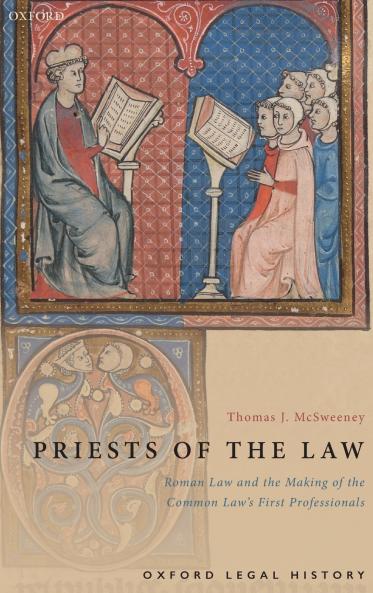
<em>Priests of the Law</em> tells the story of the first people in the history of the common law to think of themselves as legal professionals. In the middle decades of the thirteenth century a group of justices working in the English royal courts spent a great deal of time thinking and writing about what it meant to be a person who worked in the law courts. This book examines the justices who wrote the treatise known as <em>Bracton</em>. Written and re-written between the 1220s and the 1260s <em>Bracton</em> is considered one of the great treatises of the early common law and is still occasionally cited by judges and lawyers when they want to make the case that a particular rule goes back to the beginning of the common law. This book looks to <em>Bracton</em> less for what it can tell us about the law of the thirteenth century however than for what it can tell us about the judges who wrote it. <p/>The judges who wrote <em>Bracton</em> - Martin of Pattishall William of Raleigh and Henry of Bratton - were some of the first people to work full-time in England's royal courts at a time when there was no recourse to an obvious model for the legal professional. They found one in an unexpected place: they sought to clothe themselves in the authority and prestige of the scholarly Roman-law tradition that was sweeping across Europe in the thirteenth century modelling themselves on the jurists of Roman law who were teaching in European universities. In <em>Bracton</em> and other texts they produced the justices of the royal courts worked hard to ensure that the nascent common-law tradition grew from Roman Law. Through their writing this small group of people working in the courts of an island realm imagined themselves to be part of a broader European legal culture. They made the case that they were not merely servants of the king: they were priests of the law.<br>

Piracy-free

Assured Quality

Secure Transactions

Fast Delivery

Sustainably Printed
Details
ISBN 13
9780198845454
Publication Date
-14-01-2020
Pages
-304
Weight
-527 grams
Dimensions
-156x234x17.46 mm
