

English


Paperback
₹4195
(All inclusive*)
Delivery Options
Please enter pincode to check delivery time.
*COD & Shipping Charges may apply on certain items.
Review final details at checkout.
Looking to place a bulk order? SUBMIT DETAILS

Piracy-free

Assured Quality

Secure Transactions
About The Book
Description
Author
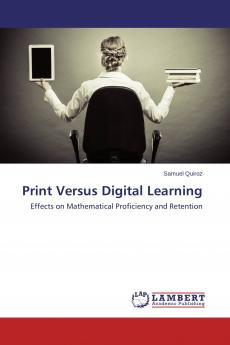
Efforts are made to constantly develop learning materials that will increase mathematical ability and promote lifelong learning. Modularization is the by-product of this constant cycle for educational progress and two well-known and used forms of a module are the traditional or the printed form and the computer-based presentations. However the effectiveness of these two forms are bound by certain limitations which are predefined by their inherent characteristics. This book aims to discuss by providing statistical evidences the comparative effects of the printed and computer-assisted forms of a modular instruction on the acquisition and retention of mathematical knowledge skills understanding and problem-solving ability as well as the influences on encouraging self-directed learning on high school students.
Piracy-free
Assured Quality
Secure Transactions
Delivery Options
Please enter pincode to check delivery time.
*COD & Shipping Charges may apply on certain items.
Review final details at checkout.
Details
ISBN 13
9783659768767
Publication Date
-17-08-2015
Pages
-64
Weight
-101 grams
Dimensions
-150x220x3.89 mm
