

English


Paperback
₹2400
(All inclusive*)
Delivery Options
Please enter pincode to check delivery time.
*COD & Shipping Charges may apply on certain items.
Review final details at checkout.
Looking to place a bulk order? SUBMIT DETAILS

Piracy-free

Assured Quality

Secure Transactions
About The Book
Description
Author
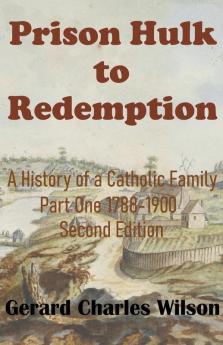
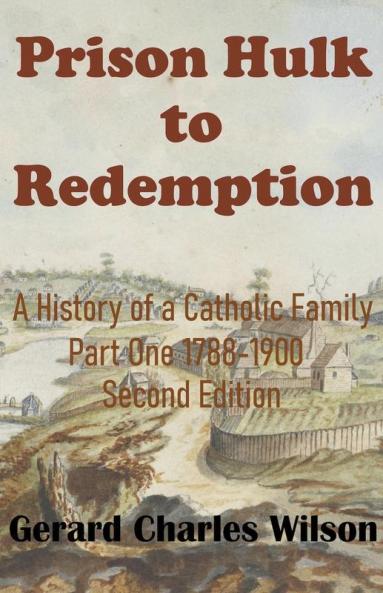
<p>SECOND EDITION Revised 2022</p><p><em><strong>A history of colonial Australia not of the famous and heroic but of the small people the anonymous people who were the heartbeat of a growing nation</strong></em></p><p>In this first book of his social history series the author sets out on a journey through Australia's colonial history with his ancestors from the British Isles. All arrived by the 1830s two on the First Fleet in 1788. Most are from central and southern England. Four are from two little villages close to each other in Wiltshire: Semley and Donhead St Mary. In addition two convicts and one free settler came from Dublin Monaghan and Donegal in Ireland and a farming family of four came from Aberdeen in Scotland. It is surprising how much he finds out about them all-joys successes and tragedies. Their lives are anything but dull.</p><p>James Joseph Wilson who narrowly escaped the gallows and was surprisingly literate for a man thrice convicted of burglary arrived in Port Jackson on board the <em>Prince Regent </em>in 1827. The colonial authorities assigned him to Robert Lowe one of the Colony's early landholders. Lowe sent him to Mudgee in north-western New South Wales to shepherd his flocks. Young 18-year-old hutkeeper James Joseph was one of the first inhabitants in the Mudgee area.</p><p>He teamed up with fellow convict Michael Jones to look for land. They married sisters Jane and Elizabeth Harris daughters of free settlers and travelled northwest to the Coonamble area 330 miles from Sydney to set up their farms. The two freed convicts and the Harris sisters became his great-great-grandparents.</p><p>Nine convicts are in his ancestors' direct line. He traces their lives against the social and historical background of colonial Australia presenting a very different picture from the view usually found in school history books. They all thrive taking advantage of their second chance. This book is the story of their redemption.</p><p>Besides offering the reader an interesting sometimes gripping family story he reveals the cultural continuities in which his ancestors acted and how they responded to those continuities in a totally different physical environment. He seeks to discover the extent to which the outlook culture and character of his ancestors shaped his extended family and him into what they are.</p><p>Naming his family Catholic is not gratuitous. Religion as a social and political force always plays a vital role in a nation. It is emphatically the case in Australia where the national establishment threw together a sizable underclass of (Irish) Catholics with the Protestant Ascendancy. How was that to work out in a democratic order where there was no legal disqualification based on religion? He deals with that. Second of my original ancestors only three were Catholic. The rest were a mixture of Protestants from the Church of England to Scottish Wesleyans to dissenters. How the Wilsons ended up Catholic makes an interesting story.</p><p>And finally perhaps most importantly he sketches a picture of how Australia developed as a new people and a new nation. In 1950 most Australians had an ancestry like his.</p><p>Since the publication of <em>Prison Hulk to Redemption</em> in 2016 the author has made many adjustments and additions. In preparing this second edition the author emphasises the social and cultural continuities to bring out his ideas about what it means to be a people and a nation.</p><p>These ideas are drawn from his interpretation of Edmund Burke's political philosophy which he conceives as a Natural Law conservatism. Burke had distinct ideas on how a healthy nation develops and if it is not careful how it decays collapses and falls prey to takeover. The author's book is a Burkean interpretation of Australia's colonial times.</p>
Piracy-free
Assured Quality
Secure Transactions
Delivery Options
Please enter pincode to check delivery time.
*COD & Shipping Charges may apply on certain items.
Review final details at checkout.
Details
ISBN 13
9798223584247
Publication Date
-24-08-2023
Pages
-446
Weight
-522 grams
Dimensions
-140x216x26.59 mm
