

English


Hardback
₹9488
₹12224
22.38% OFF
(All inclusive*)
Delivery Options
Please enter pincode to check delivery time.
*COD & Shipping Charges may apply on certain items.
Review final details at checkout.
Looking to place a bulk order? SUBMIT DETAILS

Piracy-free

Assured Quality

Secure Transactions
About The Book
Description
Author
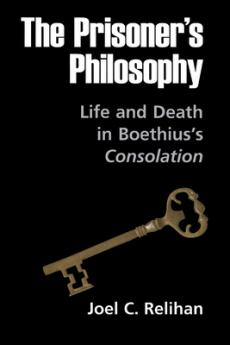
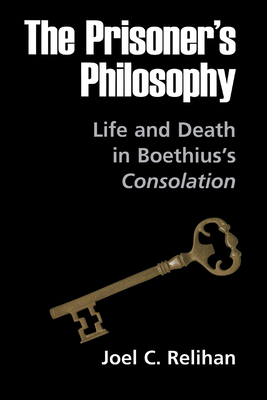
The Roman philosopher Boethius (c. 480-524) is best known for the <i>Consolation of Philosophy</i> one of the most frequently cited texts in medieval literature. In the <i>Consolation</i> an unnamed Boethius sits in prison awaiting execution when his muse Philosophy appears to him. Her offer to teach him who he truly is and to lead him to his heavenly home becomes a debate about how to come to terms with evil freedom and providence. The conventional reading of the <i>Consolation</i> is that it is a defense of pagan philosophy; nevertheless many readers who accept this basic argument find that the ending is ambiguous and that Philosophy has not finally given the prisoner the comfort she had promised. In <i>The Prisoner's Philosophy</i> Joel C. Relihan delivers a genuinely new reading of the <i>Consolation</iu>. He argues that it is a Christian work dramatizing not the truths of philosophy as a whole but the limits of pagan philosophy in particular. He views it as one of a number of literary experiments of late antiquity taking its place alongside Augustine's <i>Confessions</i> and <i>Soliloquies</i> as a spiritual meditation as an attempt by Boethius to speak objectively about the life of the mind and its relation to God. Relihan discerns three fundamental stories intertwined in the <i>Consolation</i>: an ironic retelling of Plato's <i>Crito</i> an adaptation of Lucian's <i>Jupiter Confutatus</i> and a sober reduction of Job to a quiet dialogue in which the wounded innocent ultimately learns wisdom in silence. Relihan's claim that Boethius's text was written as a Menippean satire does not rest merely on identifying a mixture of disparate literary influences on the text or on the combination of verse and prose or of fantasy and morality. More important Relihan argues Boethius deliberately dramatizes the act of writing about systematic knowledge in a way that calls into question the value of that knowledge. Philosophy's attempt to lead an exile to God's heaven is rejected; the exile comes to accept the value of the phenomenal world and theology replaces philosophy to explain the place of human beings in the order of the world. Boethius Christianizes the genre of Menippean satire and his <i>Consolation</i> is a work about humility and prayer.
Piracy-free
Assured Quality
Secure Transactions
Delivery Options
Please enter pincode to check delivery time.
*COD & Shipping Charges may apply on certain items.
Review final details at checkout.
Details
ISBN 13
9780268160302
Publication Date
-20-10-2006
Pages
-238
Weight
-416 grams
Dimensions
-152x229x14.29 mm
