


This Book is Out of Stock!
English


Paperback
₹16230
(All inclusive*)
Delivery Options
*COD & Shipping Charges may apply on certain items.
Review final details at checkout.
Looking to place a bulk order? SUBMIT DETAILS

Piracy-free

Assured Quality

Secure Transactions
About The Book
Description
Author
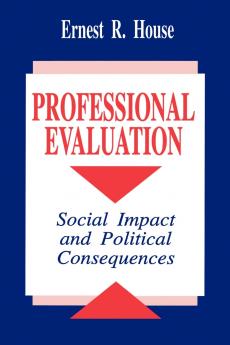
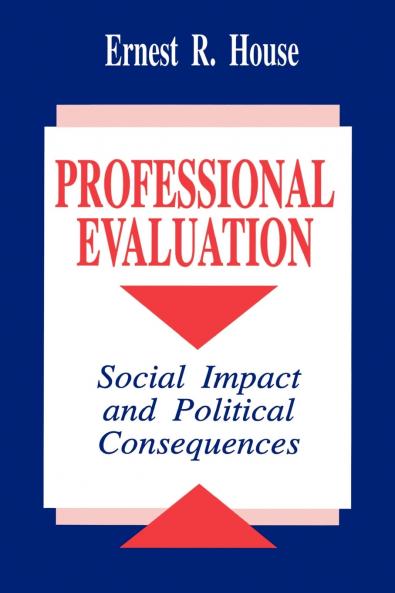
The book provides an in-depth examination of the history and discipline of evaluation as well as its treatment of the subjects of ethics justice and professionalism. . . . The strength of the book is without question Ernest R. House′s many years of experience as an evaluator and his proposition that evaluation as an institution profession and discipline represents a strong and significant force in the process of social change. --Evaluation and Program Planning This book pushes back the frontiers Ernest R. House has already established with his previous work in the political and social dimensions of professional evaluation. It represents the thoughtful reflections of an experienced evaluator with an unusual talent for original perspectives on this complex and vital emergent discipline. --Michael Scriven Director Evaluation Institute Pacific Graduate School of Psychology For 25 years Ernest R. House has watched us who specialize in program evaluation recording and interpreting in the best of qualitative ways the maturation of our field. In this book he portrays us as white collar migrant workers; carded coddled and manipulated by governments reluctant to leave the comfort of social science but having outgrown that dependency reaching toward what Michael Scriven called a transdiscipline. If Lee Cronbach once made us wince by revealing our political blood House startles us exposing neural ties with ethics technocracy capitalism manifest destiny even craniometry. Popping bluerock metaphors from liberal left to libertarian right House declares us to be complex creature of nature and nurture seldom acting of our own free will. It is a magical mythological tour. Never before has the special work of the program evaluator been shown to be immersed in and buffeted by such a diverse array of social political and philosophical currents. In an appealing mix of personal reminiscence and social commentary Ernie House has collected a fine album of the early years of program evaluation. --Robert E. Stake Center for Instructional Research and Curriculum Evaluation University of Illinois at Urbana-Champaign Why do we have evaluation? Is evaluation a discipline? How much impact does evaluation have on government education or politics? Can social problems such as poverty be solved like engineering problems by the application of resources and intelligence? By exploring how evaluation has evolved as a discipline science and profession House examines how evaluation impacts modern societies and the issues that this impact (social force) raises for evaluators. Addressing such issues as pluralism vs. managerialism quantitative vs. qualitative methodologies the purpose of higher education for knowledge production vs. educating people for professions clientism and multicultural concerns House traces how evaluation has evolved as a basis for determining where the field should go--and how.
Piracy-free
Assured Quality
Secure Transactions
*COD & Shipping Charges may apply on certain items.
Review final details at checkout.
₹16230
Out Of Stock
All inclusive*
Details
ISBN 13
9780803949966
Publication Date
-01-03-1993
Pages
-216
Weight
-299 grams
Dimensions
-152x229x12.53 mm
