


English



Paperback
₹7190
₹8449
14.9% OFF
(All inclusive*)
Delivery Options
Please enter pincode to check delivery time.
*COD & Shipping Charges may apply on certain items.
Review final details at checkout.
Looking to place a bulk order? SUBMIT DETAILS
Delivery Options
Please enter pincode to check delivery time.
*COD & Shipping Charges may apply on certain items.
Review final details at checkout.
About The Book
Description
Author(s)
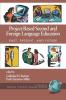
Dewey's idea of Project-based Learning (PBL) was introduced into the field of second language education nearly two decades ago as a wayto reflect the principles of student-centered teaching (Hedge 1993). Since then PBL has also become a popular language and literacyactivity at various levels and in various contexts (see Beckett 1999; Fried-Booth 2002; Levis & Levis 2003; Kobayashi 2003; Luongo-Orlando 2001; Mohan & Beckett 2003; Weinstein 2004). For example it has been applied to teach various ESL and EFL skills around theworld (e.g. Fried-Booth 2002). More recently PBL has been heralded as the most appropriate approach to teaching content-based secondlanguage education (Bunch et al. 2001; Stoller 1997) English for specific purposes (Fried-Booth 2002) community-based languagesocialization (Weinstien 2004) and critical and higher order thinking as well as problem-solving skills urged by the National ResearchCouncil (1999). Despite this emphasis there is a severe shortage of empirical research on PBL and research-based frameworks and modelsbased on sound theoretical guidance in general and second and foreign language education in particular (Thomas 2000). Also missing fromthe second and foreign language education literature is systematic discussion of PBL work that brings together representative workidentifying obvious gaps and guiding the field toward future directions. This first of its kind volume bridges these obvious gaps throughthe original work of international scholars from Canada Israel Japan Singapore and the US.

Piracy-free

Assured Quality

Secure Transactions

Fast Delivery

Sustainably Printed
Details
ISBN 13
9781593115050
Publication Date
-10-09-2006
Pages
-304
Weight
-435 grams
Dimensions
-156x234x16.18 mm
