


English


Paperback
₹2735
₹3632
24.7% OFF
(All inclusive*)
Delivery Options
Please enter pincode to check delivery time.
*COD & Shipping Charges may apply on certain items.
Review final details at checkout.
Looking to place a bulk order? SUBMIT DETAILS
Delivery Options
Please enter pincode to check delivery time.
*COD & Shipping Charges may apply on certain items.
Review final details at checkout.
About The Book
Description
Author
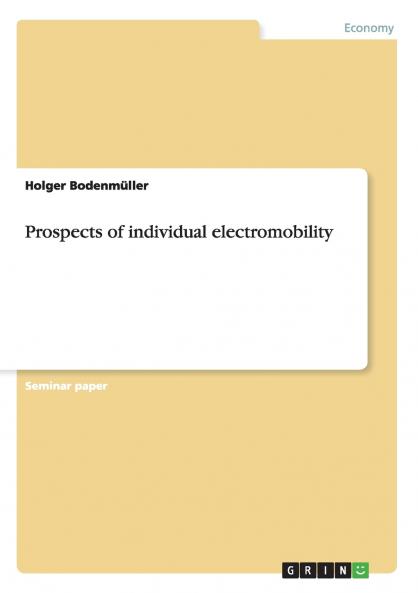
Seminar paper from the year 2011 in the subject Business economics - General grade: 20 University of applied sciences Munich course: Economics language: English abstract: Main drivers for the discussion of electromobility are the depletion of world's oil resources and the evolving discussion of climate protection. Stricter CO2 regulations for all developed markets put a high pressure on the automotive industry. Automotive original equipment manufacturer (OEMs) are forced to transport a green image and claim the top position in terms of technological leadership. Future challenges can only be met by cooperation of different industries and politics. Political support and subsidies can speed up the introduction of electromobility. New competences are needed and production depth moves from the OEMs to suppliers. As long as fossil resources in particular coal play the predominant role in energy production the contribution of battery electric vehicles (BEVs) to CO2 reduction is low. Access to limited resources such as Lithium and rare earth will be critical and probably establish future dependencies. Manufacturing costs and total cost of ownership (TCO) will remain higher for an electric vehicle (EV) in the foreseeable future. Customers believe in the future of EVs but are not ready to pay higher prices. The estimated market share of hybrid electric vehicles (HEVs) and BEVs will not exceed 20% in 2025.

Piracy-free

Assured Quality

Secure Transactions

Fast Delivery

Sustainably Printed
Details
ISBN 13
9783656633839
Publication Date
-17-06-2014
Pages
-28
Weight
-49 grams
Dimensions
-148x210x1.7 mm
