

English


Paperback
₹1558
₹1673
6.87% OFF
(All inclusive*)
Delivery Options
Please enter pincode to check delivery time.
*COD & Shipping Charges may apply on certain items.
Review final details at checkout.
Looking to place a bulk order? SUBMIT DETAILS
Delivery Options
Please enter pincode to check delivery time.
*COD & Shipping Charges may apply on certain items.
Review final details at checkout.
About The Book
Description
Author(s)
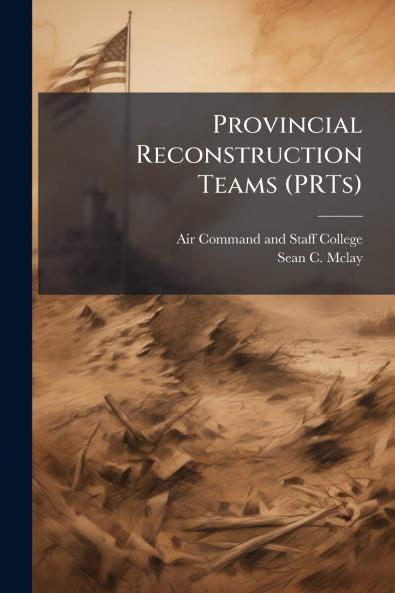
<p>In an effort to prevent Iraq from sliding further into civil conflict one of President Bush's most significant initiatives has been to double the number of Provincial Reconstruction Teams in order to expand the reach of the fledgling central government.1 Short of sending a large contingent of forces to secure and run a country which is impractical considering the simultaneous conflicts in Iraq and Afghanistan PRTs - small joint civil-military teams - attempt to fill the post-conflict void in the areas of stability reconstruction and governance. Given the current administration's emphasis some observers wonder if the US government considers PRTs to be a panacea for the ethnic and sectarian struggle in Iraq.While most experts agree that PRTs have been somewhat successful in bringing stability to the Afghan provinces the model has yet to prove itself as an effective long-term vehicle for stabilization and reconstruction.2 Furthermore by undertaking reconstruction and assistance missions these teams have incurred the wrath of international aid organizations by infringing upon the neutrality they seek to associate with aid and development. Considering the experiences of United States and North Atlantic Treaty Organization forces in Afghanistan this paper offers tactical operational and strategic recommendations for optimizing the PRT construct as a tool for stability and reconstruction operations in Iraq and future conflicts while alleviating many of the concerns of international aid agencies working in the same region.In the final analysis the success of the PRT construct regardless of how effective it can be made hinges upon one significant precondition - sufficient security must exist to allow the program to take root. Given success in the area of security PRTs could prove to be the deciding factor in encouraging reconstruction and facilitating good governance in a post-conflict environment and ultimately nurturing the seeds of a stable democrat</p><p>This work has been selected by scholars as being culturally important and is part of the knowledge base of civilization as we know it. This work was reproduced from the original artifact and remains as true to the original work as possible. Therefore you will see the original copyright references library stamps (as most of these works have been housed in our most important libraries around the world) and other notations in the work.</p><p>This work is in the public domain in the United States of America and possibly other nations. Within the United States you may freely copy and distribute this work as no entity (individual or corporate) has a copyright on the body of the work.</p><p>As a reproduction of a historical artifact this work may contain missing or blurred pages poor pictures errant marks etc. Scholars believe and we concur that this work is important enough to be preserved reproduced and made generally available to the public. We appreciate your support of the preservation process and thank you for being an important part of keeping this knowledge alive and relevant.</p><br>

Piracy-free

Assured Quality

Secure Transactions

Fast Delivery

Sustainably Printed
Details
ISBN 13
9781025082219
Publication Date
-22-05-2025
Pages
-40
Weight
-73 grams
Dimensions
-156x234x2.1 mm
