



This Book is Out of Stock!
English



Paperback
₹3132
₹4035
22.38% OFF
(All inclusive*)
Delivery Options
*COD & Shipping Charges may apply on certain items.
Review final details at checkout.
Looking to place a bulk order? SUBMIT DETAILS
*COD & Shipping Charges may apply on certain items.
Review final details at checkout.
About The Book
Description
Author
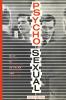
<p>Bridging landmark territory in film studies <i>Psycho-Sexual</i> is the first book to apply Alfred Hitchcock's legacy to three key directors of 1970s Hollywood-Brian De Palma Martin Scorsese and William Friedkin-whose work suggests the pornographic male gaze that emerged in Hitchcock's depiction of the voyeuristic homoerotically inclined American man. Combining queer theory with a psychoanalytic perspective David Greven begins with a reconsideration of <i>Psycho</i> and the 1956 remake of <i>The Man Who Knew Too Much</i> to introduce the filmmaker's evolutionary development of American masculinity.</p> <p><i>Psycho-Sexual</i> probes De Palma's early Vietnam War draft-dodger comedies as well as his film <i>Dressed to Kill</i> along with Scorsese's <i>Taxi Driver</i> and Friedkin's <i>Cruising</i> as reactions to and inventive elaborations upon Hitchcock's gendered themes and aesthetic approaches. Greven demonstrates how the significant political achievement of these films arises from a deeply disturbing violent even sorrowful psychological and social context. Engaging with contemporary theories of pornography while establishing pornography's emergence during the classical Hollywood era Greven argues that New Hollywood filmmakers seized upon Hitchcock's radical decentering of heterosexual male dominance. The resulting images of heterosexual male ambivalence allowed for an investment in same-sex desire; an aura of homophobia became informed by a fascination with the homoerotic. <i>Psycho-Sexual</i> also explores the broader gender crisis and disorganization that permeated the Cold War and New Hollywood eras reimagining the defining premises of Hitchcock criticism.</p>

Piracy-free

Assured Quality

Secure Transactions
₹3132
₹4035
22% OFF
Paperback
Out Of Stock
All inclusive*
Details
ISBN 13
9780292756762
Publication Date
-01-01-2013
Pages
-312
Weight
-425 grams
Dimensions
-152x229x17.77 mm
