

English


Paperback
₹1691
₹1858
8.99% OFF
(All inclusive*)
Delivery Options
Please enter pincode to check delivery time.
*COD & Shipping Charges may apply on certain items.
Review final details at checkout.
Looking to place a bulk order? SUBMIT DETAILS
Delivery Options
Please enter pincode to check delivery time.
*COD & Shipping Charges may apply on certain items.
Review final details at checkout.
About The Book
Description
Author
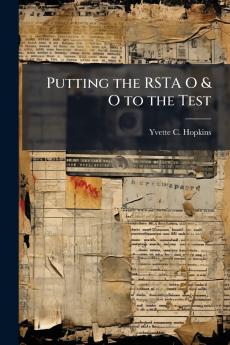
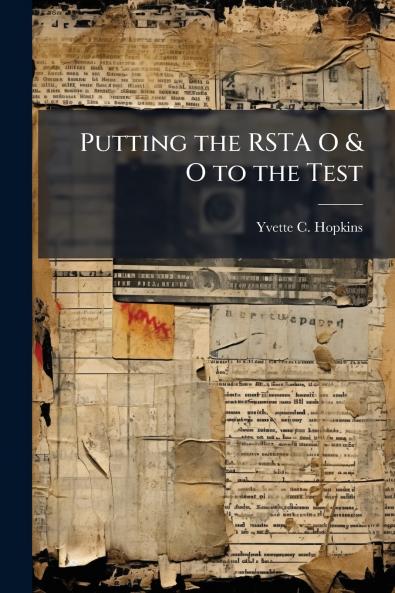
<p>At the time of this writing it is May 2001. A new strategically responsive medium weight unit from Fort Lewis Washington designated the Interim Brigade Combat Team (IBCT) is being formed and tested. The IBCT's organic intelligence architecture the Brigade S2 a Military Intelligence (MI) Company and the Reconnaissance Surveillance and Target Acquisition (RSTA) Squadron are also being formed and tested. The RSTA's unique cavalry-type reconnaissance and Military Intelligence collection capabilities are the focus of this study. The study is set in a fictitious Thailand - Burma smaller-scale contingency scenario in the year 2004 when the IBCT and RSTA are expected to be fully mission capable. At the request of the Thai government the US National Command Authorities have authorized two Joint Task Forces (JTF) to the region to support Thai sovereignty and conduct humanitarian assistance operations. The IBCT and its organic intelligence architecture are deployed to the area. The monograph specifically placed the RSTA squadron into a worst case scenario - one with competing humanitarian and possible combat operations overshadowed by an uncertain threat to determine intelligence planning considerations. Intelligence contingency planners have little to assist them in planning for the employment of the new RSTA squadron. The uncertainty of the Thai-Burma situation required the study to consider: is the intelligence architecture supporting the IBCT capable of full-scale intelligence operations in this complex environment? The study calculated the capabilities of the intelligence architecture in a Smaller-Scale Contingency (SSC) Burma - Thailand scenario to determine how it can fully support complex operations. This monograph used elements of operational design (time space purpose and resources) to specifically analyze and evaluate the capabilities and limitations of the IBCT's intelligence architecture. The snap-shot-in-time analysis highlighted operational-lev</p><p>This work has been selected by scholars as being culturally important and is part of the knowledge base of civilization as we know it. This work was reproduced from the original artifact and remains as true to the original work as possible. Therefore you will see the original copyright references library stamps (as most of these works have been housed in our most important libraries around the world) and other notations in the work.</p><p>This work is in the public domain in the United States of America and possibly other nations. Within the United States you may freely copy and distribute this work as no entity (individual or corporate) has a copyright on the body of the work.</p><p>As a reproduction of a historical artifact this work may contain missing or blurred pages poor pictures errant marks etc. Scholars believe and we concur that this work is important enough to be preserved reproduced and made generally available to the public. We appreciate your support of the preservation process and thank you for being an important part of keeping this knowledge alive and relevant.</p>

Piracy-free

Assured Quality

Secure Transactions

Fast Delivery

Sustainably Printed
Details
ISBN 13
9781288312351
Publication Date
-19-11-2012
Pages
-72
Weight
-117 grams
Dimensions
-156x234x3.89 mm
