

English


Paperback
₹1694
₹1866
9.22% OFF
(All inclusive*)
Delivery Options
Please enter pincode to check delivery time.
*COD & Shipping Charges may apply on certain items.
Review final details at checkout.
Looking to place a bulk order? SUBMIT DETAILS
Delivery Options
Please enter pincode to check delivery time.
*COD & Shipping Charges may apply on certain items.
Review final details at checkout.
About The Book
Description
Author(s)
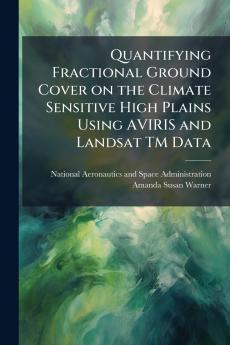
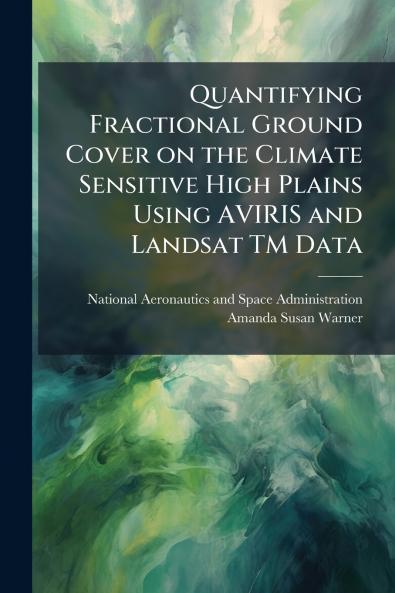
<p>The High Plains is an economically important and climatologically sensitive region of the United States and Canada. The High Plains contain 100000 sq km of Holocene sand dunes and sand sheets that are currently stabilized by natural vegetation. Droughts and the larger threat of global warming are climate phenomena that could cause depletion of natural vegetation and make this region susceptible to sand dune reactivation. This thesis is part of a larger study that is assessing the effect of climate variability on the natural vegetation that covers the High Plains using Landsat 5 and Landsat 7 data. The question this thesis addresses is how can fractional vegetation cover be mapped with the Landsat instruments using linear spectral mixture analysis and to what accuracy. The method discussed in this thesis made use of a high spatial and spectral resolution sensor called AVIRIS (Airborne Visible and Infrared Imaging Spectrometer) and field measurements to test vegetation mapping in three Landsat 7 sub-scenes. Near-simultaneous AVIRIS images near Ft. Morgan Colorado and near Logan New Mexico were acquired on July 10 1999 and September 30 1999 respectively. The AVIRIS flights preceded Landsat 7 overpasses by approximately one hour. These data provided the opportunity to test spectral mixture algorithms with AVIRIS and to use these data to constrain the multispectral mixed pixels of Landsat 7. The comparisons of mixture analysis between the two instruments showed that AVIRIS endmembers can be used to unmix Landsat 7 data with good estimates of soil cover and reasonable estimates of non-photosynthetic vegetation and green vegetation. Landsat 7 derived image endmembers correlate with AVIRIS fractions but the error is relatively large and does not give a precise estimate of cover.</p><p>This work has been selected by scholars as being culturally important and is part of the knowledge base of civilization as we know it. This work was reproduced from the original artifact and remains as true to the original work as possible. Therefore you will see the original copyright references library stamps (as most of these works have been housed in our most important libraries around the world) and other notations in the work.</p><p>This work is in the public domain in the United States of America and possibly other nations. Within the United States you may freely copy and distribute this work as no entity (individual or corporate) has a copyright on the body of the work.</p><p>As a reproduction of a historical artifact this work may contain missing or blurred pages poor pictures errant marks etc. Scholars believe and we concur that this work is important enough to be preserved reproduced and made generally available to the public. We appreciate your support of the preservation process and thank you for being an important part of keeping this knowledge alive and relevant.</p>

Piracy-free

Assured Quality

Secure Transactions

Fast Delivery

Sustainably Printed
Details
ISBN 13
9781288910830
Publication Date
-12-03-2013
Pages
-84
Weight
-133 grams
Dimensions
-156x234x4.52 mm
