


English


Paperback
₹1795
₹2012
10.79% OFF
(All inclusive*)
Delivery Options
Please enter pincode to check delivery time.
*COD & Shipping Charges may apply on certain items.
Review final details at checkout.
Looking to place a bulk order? SUBMIT DETAILS
Delivery Options
Please enter pincode to check delivery time.
*COD & Shipping Charges may apply on certain items.
Review final details at checkout.
About The Book
Description
Author
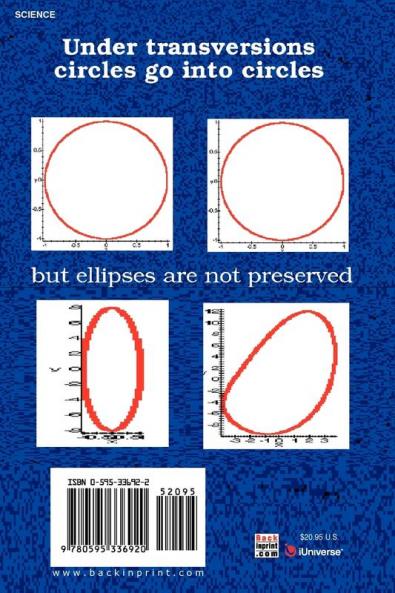
The conformal group is the invariance group of geometry (which is not understood) the largest one. Physical applications are implied as discussed including reasons for interactions. The group structure as well as those of related groups are analyzed. An inhomogeneous group is a subgroup of a homogeneous one because of nonlinearities of the realization. Conservation of baryons (protons can't decay) is explained and proven. Reasons for various realizations so matrix elements of the Lorentz group given. The clearly relevant mass level formula is compared with experimental values. Questions implications and possibilities including for differential equations are raised.

Piracy-free

Assured Quality

Secure Transactions

Fast Delivery

Sustainably Printed
Details
ISBN 13
9780595336920
Publication Date
-14-02-2005
Pages
-316
Weight
-430 grams
Dimensions
-152x229x17.99 mm
