

English


Hardback
₹11596
₹14878
22.06% OFF
(All inclusive*)
Delivery Options
Please enter pincode to check delivery time.
*COD & Shipping Charges may apply on certain items.
Review final details at checkout.
Looking to place a bulk order? SUBMIT DETAILS
Delivery Options
Please enter pincode to check delivery time.
*COD & Shipping Charges may apply on certain items.
Review final details at checkout.
About The Book
Description
Author(s)
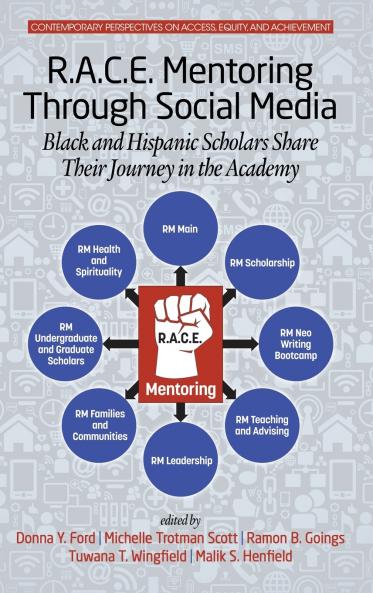
<p>A volume in Contemporary Perspectives on Access Equity and Achievement</p><p>The Ivory Tower is and can often be a lonely place for faculty of color. Social injustices run deep and are entrenched within academia. Faculty of color (FOC) more<br />specifically Black and Hispanic often lament about the &lsquo;Black/Brown&rsquo; tax that frequently takes its toll both personally and professionally and pushes them out of the<br />academy. Similar to trends in P?12 settings educators of color in postsecondary contexts represent less than 10% of the profession. In essence we are an anomaly and<br />the implications of this are clear and dire as evidenced by persistent achievement access and expectation gaps within the academy.<br />Scholars of color (SOC) at all stages but particularly during doctoral training frequently struggle to not just survive but to thrive in the academy. Too many fail to earn<br />their doctoral degree with many wearing the All But Dissertation (ABD) as a badge of honor. Although ABD is not a degree many scholars of color receive inadequate<br />mentoring often substandard in comparison to the hand?holding White students receive which leaves far too many doctoral students of color lost bewildered angry<br />indignant and defeated. This righteous indignation is justified but excused away using the myth of meritocracy and colorblind notions of success; followed by a myriad of<br />problems steeped with victim blaming as noted in the classic Presumed Incompetent: The Intersections of Race and Class for Women in Academia (Guti&eacute;rrez y Muhs<br />Niemann Gonz&aacute;lez &amp; Harris 2012). The aforementioned work was not the first treatise on higher education and how the non?status quo along with those grappling with<br />oppression and double standards experience the profession called higher education. Moreover The Chilly Climate (Sandler Silverberg &amp; Hall 1996) report which<br />focused on females was also telling but not enough was addressed and disclosed about females of color until version<br />two. But these issues do not stop with females of color but instead extend to all faculty of color.<br />R.A.C.E. Mentoring a social media Facebook group with several subgroups (see Figures 1 and 2) was created by<br />Donna Y. Ford Michelle Trotman Scott and Malik S. Henfield in 2013 to tackle the numerous thorny and contentious<br />issues and challenges in higher education. We began by intentionally attending to the needs of students enrolled at<br />mostly White universities as well as those who attended historically Black colleges and universities while keeping the<br />unique nuances and challenges of each setting in mind. We wanted scholars of color to thrive in both. Fondly and<br />affectionately called RM our charge and challenge is to affirm the dignity and worth of scholars of color. Additionally<br />we recognize that there are scholars outside of academe and their contributions as well to impact and affect change<br />for Black and Brown people inside and outside of academe need to be acknowledged. These scholars are community<br />organizers activists P?12 teachers and families. It truly takes a village&hellip;</p>

Piracy-free

Assured Quality

Secure Transactions

Fast Delivery

Sustainably Printed
Details
ISBN 13
9781681237046
Publication Date
-30-11-2016
Pages
-322
Weight
-551 grams
Dimensions
-156x234x19.05 mm
