

English



Hardback
₹7545
₹9124
17.31% OFF
(All inclusive*)
Delivery Options
Please enter pincode to check delivery time.
*COD & Shipping Charges may apply on certain items.
Review final details at checkout.
Looking to place a bulk order? SUBMIT DETAILS

Piracy-free

Assured Quality

Secure Transactions
About The Book
Description
Author(s)
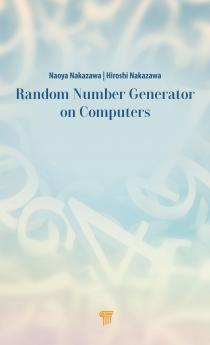
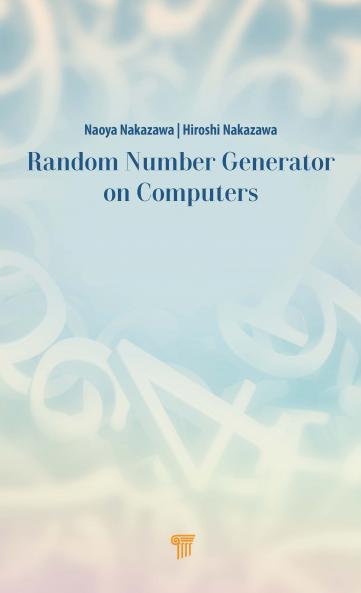
<p>This monograph proves that any finite random number sequence is represented by the multiplicative congruential (MC) way. It also shows that an MC random number generator (d z) formed by the modulus d and the multiplier z should be selected by new regular simplex criteria to give random numbers an excellent disguise of independence. The new criteria prove further that excellent subgenerators (d1z1) and (d2z2) with coprime odd submoduli d1 and d2 form an excellent combined generator (d = d1d2z) with high probability by Sunzi’s theorem of the 5th-6th centuries (China) contrasting the fact that such combinations could never be found with MC subgenerators selected in the 20th-century criteria. Further a combined MC generator (d = d1d2z) of new criteria readily realizes periods of 252 or larger requiring only fast double-precision arithmetic by powerful Sunzi’s theorem. We also obtain MC random numbers distributed on spatial lattices say two-dimensional 4000 by 4000 lattices which may be tori with little pair correlations of random numbers across the nearest neighbors. Thus we evade the problems raised by Ferrenberg Landau and Wong.</p>
Piracy-free
Assured Quality
Secure Transactions
Delivery Options
Please enter pincode to check delivery time.
*COD & Shipping Charges may apply on certain items.
Review final details at checkout.
Details
ISBN 13
9789814968492
Publication Date
-28-11-2024
Pages
-120
Weight
-262 grams
Dimensions
-152x229x8.17 mm
