

English


Paperback
₹5285
₹6140
13.93% OFF
(All inclusive*)
Delivery Options
Please enter pincode to check delivery time.
*COD & Shipping Charges may apply on certain items.
Review final details at checkout.
Looking to place a bulk order? SUBMIT DETAILS
Delivery Options
Please enter pincode to check delivery time.
*COD & Shipping Charges may apply on certain items.
Review final details at checkout.
About The Book
Description
Author(s)
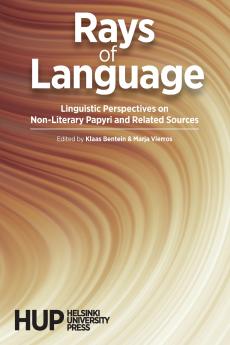
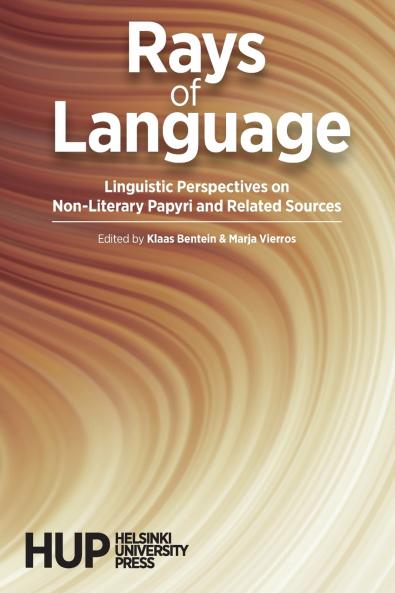
<p><span style=background-color: rgba(0 0 0 0); color: rgba(0 0 0 1)>Renewed attention to the language of ancient documentary sources - above all Greek papyri - has opened new paths in linguistic research. </span><em style=background-color: rgba(0 0 0 0); color: rgba(0 0 0 1)>Rays of Language: Linguistic Perspectives on Non-Literary Papyri and Related Sources</em><span style=background-color: rgba(0 0 0 0); color: rgba(0 0 0 1)> brings together specialists from across the field to explore how everyday written documents illuminate linguistic diversity change and communication in the ancient world. The volume offers a comprehensive overview of current approaches to the study of non-literary Greek and related languages.</span></p><p><span style=background-color: rgba(0 0 0 0); color: rgba(0 0 0 1)>Drawing on new corpora digital tools and theoretical frameworks the contributors examine a wide range of linguistic phenomena from spelling practices and language contact to syntax register and discourse structure. Each chapter demonstrates how documentary texts often considered peripheral in fact provide crucial evidence for the dynamics of language in use and for the multilingual realities of Graeco-Roman and Late Antique Egypt.</span></p><p><span style=background-color: rgba(0 0 0 0); color: rgba(0 0 0 1)>The book is organised into four thematic parts. Part 1: Language Contact and Scribal Influence explores multilingualism scribal norms and the interplay between Greek and other languages used in Egypt including Latin and Coptic while also considering early Arabic documentary practices within a comparative framework. Part 2: Quantitative Studies applies corpus-based and computational methods to questions of usage and change revealing new insights into frequency and distribution. Part 3: New Insights on Greek Syntax investigates syntactic developments in the papyri shedding light on phenomena such as the optative insubordination and variation in formulaic complementation structures. And Part 4: Socio-Pragmatic Approaches situates linguistic choices within their social and communicative settings analysing stylistic variation occupational language and discourse markers.</span></p><p><span style=background-color: rgba(0 0 0 0); color: rgba(0 0 0 1)>By situating Greek within its wider linguistic environment - engaging with Latin Coptic and Arabic sources - </span><em style=background-color: rgba(0 0 0 0); color: rgba(0 0 0 1)>Rays of Language</em><span style=background-color: rgba(0 0 0 0); color: rgba(0 0 0 1)> broadens the horizons of papyrological linguistics and historical sociolinguistics alike. It offers both a synthesis of ongoing developments and a stimulus for future research into the language of the ancient Mediterranean's everyday written culture.</span></p><p></p><p><strong style=background-color: rgba(0 0 0 0); color: rgba(0 0 0 1)>Klaas Bentein </strong><span style=background-color: rgba(0 0 0 0); color: rgba(0 0 0 1)>is an associate research professor of classics and linguistics at Ghent University.</span></p><p><strong style=background-color: rgba(0 0 0 0); color: rgba(0 0 0 1)>Marja Vierros </strong><span style=background-color: rgba(0 0 0 0); color: rgba(0 0 0 1)>is a professor of classical philology at the University of Helsinki.</span></p>

Piracy-free

Assured Quality

Secure Transactions
Details
ISBN 13
9789523691391
Publication Date
-11-12-2025
Pages
-442
Weight
-595 grams
Dimensions
-152x229x22.77 mm
