

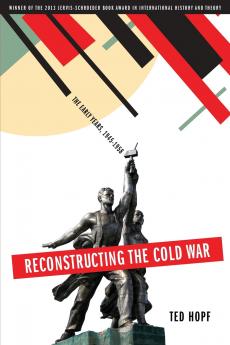
by
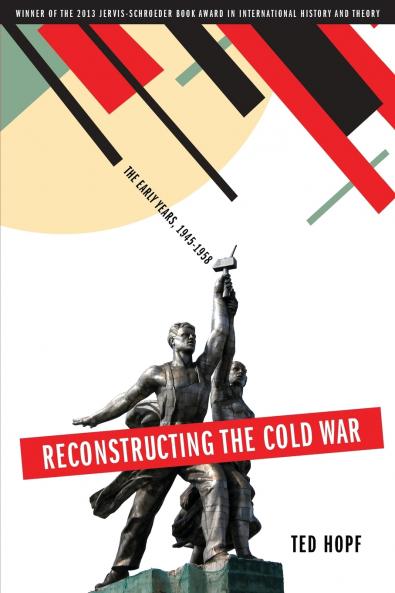
Ted Hopf
English


Paperback
₹5249
₹6730
22.01% OFF
(All inclusive*)
Delivery Options
Please enter pincode to check delivery time.
*COD & Shipping Charges may apply on certain items.
Review final details at checkout.
Looking to place a bulk order? SUBMIT DETAILS

Piracy-free

Assured Quality

Secure Transactions
About The Book
Description
Author
General answers are hard to imagine for the many puzzling questions that are raised by Soviet relations with the world in the early years of the Cold War. Why was Moscow more frightened by the Marshall Plan than the Truman Doctrine? Why would the Soviet Union abandon its closest socialist ally Yugoslavia just when the Cold War was getting under way? How could Khrushchev''s de-Stalinized domestic and foreign policies at first cause a warming of relations with China and then lead to the loss of its most important strategic ally? What can explain Stalin''s failure to ally with the leaders of the decolonizing world against imperialism and Khrushchev''s enthusiastic embrace of these leaders as anti-imperialist at a time of the first detente of the Cold War? It would seem that only idiosyncratic explanations could be offered for these seemingly incoherent policy outcomes. Or at best they could be explained by the personalities of Stalin and Khrushchev as leaders. The latter although plausible is incorrect. In fact the most Stalinist of Soviet leaders the secret police chief and sociopath Lavrentii Beria was the most enthusiastic proponent of de-Stalinized foreign and domestic policies after Stalin''s death in March 1953.Ted Hopf argues instead that it was Soviet identity that explains these anomalies. During Stalin''s rule a discourse of danger prevailed in Soviet society where any deviations from the idealized version of the New Soviet Man were understood as threatening the very survival of the Soviet project itself. But the discourse of danger did not go unchallenged. Even under the rule of Stalin Soviet society understood a socialist Soviet Union as a more secure diverse and socially democratic place. This discourse of difference with its broader conception of what the socialist project meant and who could contribute to it was empowered after Stalin''s death first by Beria then by Malenkov and then by Khrushchev and rest of the post-Stalin Soviet leadership. This discourse of difference allowed for the de-Stalinization of Eastern Europe with the consequent revolts in Poland and Hungary a rapprochement with Tito''s Yugoslavia and an initial warming of relations with China. But it also sowed the seeds of the split with China as the latter moved in the very Stalinist direction at home just rejected by Moscow. And contrary to conventional and scholarly wisdom a moderation of authoritarianism at home a product of the discourse of difference did not lead to a moderation of Soviet foreign policy abroad. Instead it led to the opening of an entirely new and bloody front in the decolonizing world sum this book argues for paying attention to how societies understand themselves even in the most repressive of regimes. Who knows their ideas about national identity might come to power sometime as was the case in Iran in 1979 and throughout the Arab world today.
Piracy-free
Assured Quality
Secure Transactions
Delivery Options
Please enter pincode to check delivery time.
*COD & Shipping Charges may apply on certain items.
Review final details at checkout.
Details
ISBN 13
9780199379767
Publication Date
-01-04-2014
Pages
-316
Weight
-451 grams
Dimensions
-156x234x17.99 mm
